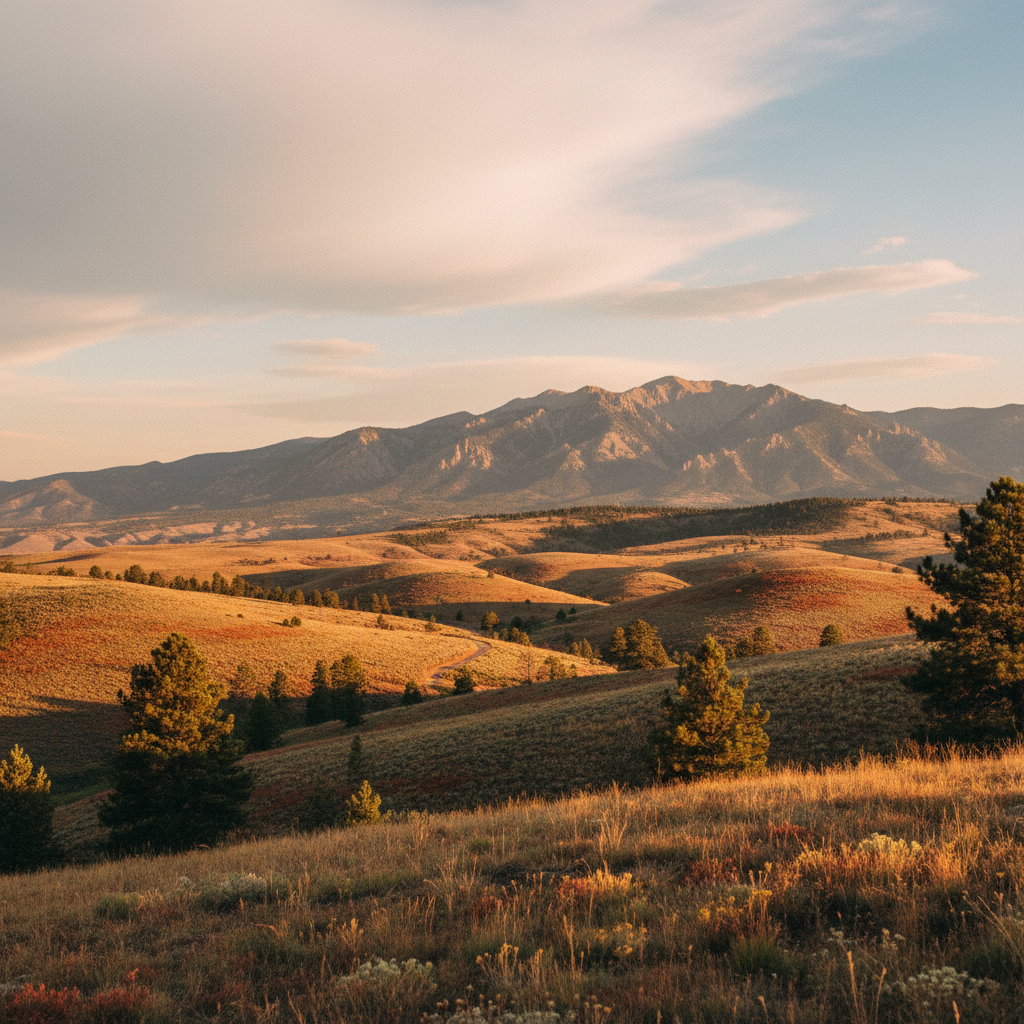
A 2,701-acre state park at the edge of Colorado Springs, preserving a rich transition zone of shortgrass prairie, pine forests, and rugged mountain trails.
Cheyenne Mountain State Park protects 2,701 acres of critical transition zone where the Great Plains collide with the granite foothills of the southern Front Range. Established in October 2006, the park preserves a landscape that was once the historic JL Ranch, a working cattle ranch from the mid-twentieth century that relocated in 1961 when the nearby NORAD Combat Operations Center was constructed inside the mountain itself. Long before the ranching era, the area served as a seasonal migration route for Ute and other Indigenous peoples traveling between winter and summer hunting grounds. In the early twentieth century, homesteaders like Bert Swisher and Thomas Dixon built cabins on the rugged upper slopes, leaving a legacy of stewardship that paved the way for the park's eventual acquisition in June 2000 through a partnership between the City of Colorado Springs, Great Outdoors Colorado, and Colorado State Parks. Today, the park serves as a vital ecological buffer right at the southern edge of Colorado Springs, where the scent of ponderosa pine and dry prairie grass mingles in the mountain air.
The park's trail system features 21 distinct routes covering over 28 miles, ranging from gentle meadow strolls to grueling backcountry ascents. For years, the upper reaches of the mountain remained inaccessible, but the opening of the Dixon Trail in 2018 transformed the park's hiking landscape. This demanding backcountry route begins at the Limekiln Trailhead, utilizing the Talon and North Talon trails before climbing steeply up the mountain's rugged eastern flank. The Dixon Trail is a strenuous 17-mile round-trip trek with over 3,000 feet of elevation gain, taking hikers past a historic 1957 plane crash site and connecting to the high-altitude loops of the Dragon's Backbone and Mountain Loop trails. For those seeking a less punishing day on the trail, the Talon Trail offers a scenic 7.4-mile figure-eight loop through gambel oak and ponderosa forest, offering close-up views of the mountain's craggy face. Meanwhile, the Blackmer Loop Trail provides a moderate route winding through massive granite rock gardens, including a famous pine tree growing directly out of a boulder.
Beyond the trails, Cheyenne Mountain State Park features a modern campground with 61 campsites distributed across loops like Gobbler Grove, providing a quiet basecamp beneath the mountain's shadow. The park is also home to a comprehensive archery range with a field target system accessed via the Bear Track Trail, where archers and hikers alike might spot some of the park's abundant wildlife. Because the land remained largely unfragmented during its ranching years, it supports a remarkably diverse ecosystem: black bears, cougars, coyotes, red foxes, and mule deer roam the scrub oak and pine forests, while golden eagles and red-tailed hawks soar overhead. Visitors can learn about these species at the universally accessible visitor center located off JL Ranch Heights Road, which serves as the gateway to this preserved wilderness. Note that to protect the fragile habitats, dogs are strictly limited to select designated paths like the Acorn Alley and Bobcat Way trails, ensuring the park's wild residents can continue to thrive undisturbed.
If you plan to hike the grueling 17-mile round-trip Dixon Trail to the top of the mountain, start before dawn at the Limekiln Trailhead to avoid afternoon thunderstorms, and carry at least four liters of water since there are no refill stations along the route.