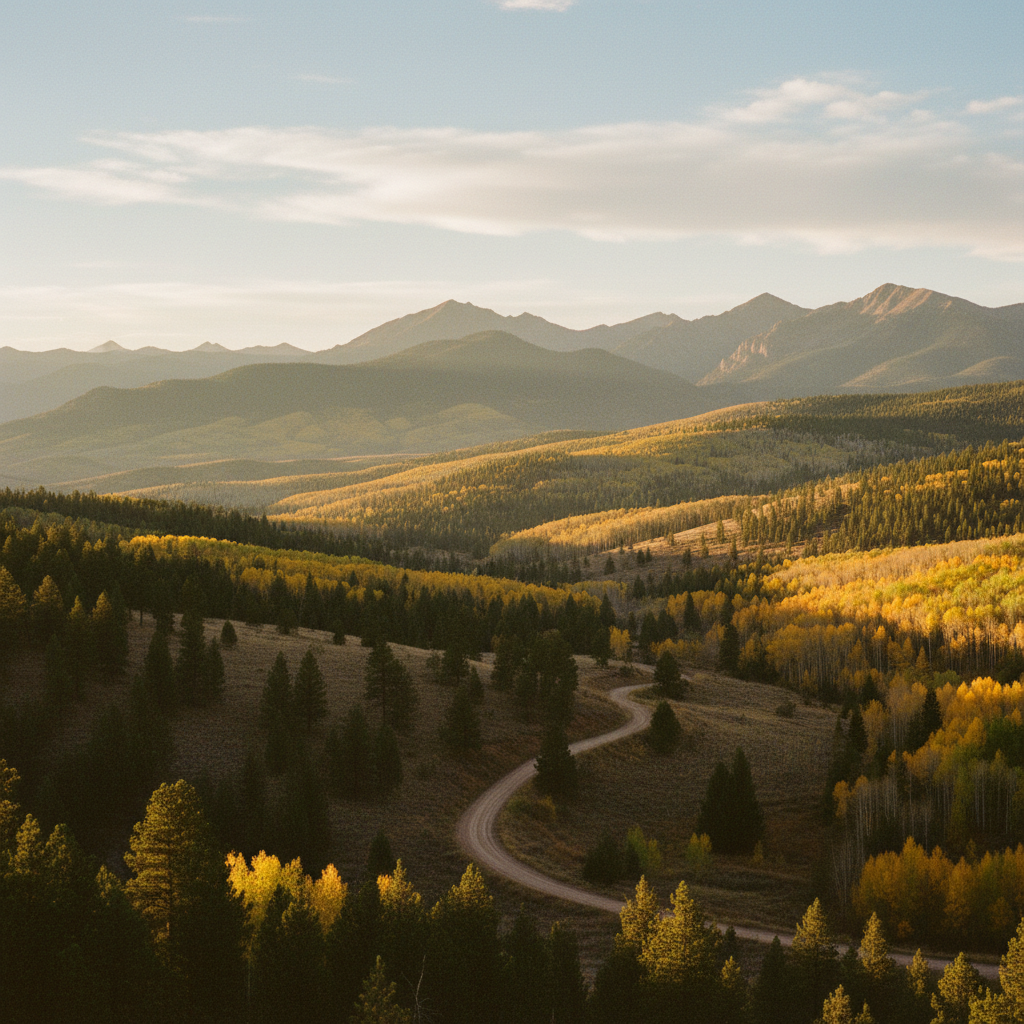
A 5,121-acre high-country park on the western slopes of Pikes Peak, featuring 55 miles of trails, historic ranches, and prime wildlife viewing among aspen groves and granite domes.
Mueller State Park encompasses 5,121 acres of high-altitude wilderness on the western slopes of Pikes Peak, known historically to the Núu-agha-tʉvʉ-pʉ̱ (Ute) people as Tava, or Sun Mountain. Sitting at an elevation ranging from 9,000 feet up to 9,843 feet at the summit of Grouse Mountain, the park is defined by massive outcrops of Pikes Peak granite, spring-fed meadows, and dense forests of ponderosa pine, Douglas fir, and trembling aspens. The air here is thin and crisp, carrying the scent of damp soil and pine needles. This montane landscape transitions between dry coniferous woodlands and cooler subalpine zones, creating a rich sanctuary for native wildlife. Large herds of elk and mule deer graze in the open meadows, black bears forage in the berry bushes, and Steller's jays call from the high branches.
The modern boundaries of the park protect a landscape once defined by the Pikes Peak and Cripple Creek gold rushes of the late nineteenth century. Pioneers, miners, and homesteaders settled these valleys, leaving behind historic structures and spring-fed ponds that still dot the backcountry. In the 1950s, Colorado Springs businessman W.E. Mueller began purchasing these scattered homesteads and ranches, eventually assembling the 5,000-acre Mueller Ranch as a private game preserve. Recognizing the ecological value of the land, the Mueller family worked with the Nature Conservancy and the state to preserve it, leading to the official opening of the state park in 1991. Today, hikers can explore the remnants of this ranching heritage along the Cheesman Ranch Loop, a moderate trail that winds past historic wooden barn structures and open pastures where cattle once grazed.
Exploring the park means navigating its 55 miles of scenic trails, which remain closed to pets to protect the local wildlife populations. The Outlook Ridge Trail leads to three distinct viewpoints: Raven Ridge, Red Tail, and Lone Eagle, each offering expansive views of the Sangre de Cristo Range, the Collegiate Peaks, and the Continental Divide. For a shorter climb, the trail to the top of Grouse Mountain rewards hikers with panoramic views of the western face of Pikes Peak. Camping is centered around the park's well-appointed loops, including Peak View and Revenuers Ridge, which offer 136 campsites, many with electrical hookups, alongside three fully furnished log cabins available for year-round stays. During the winter, the landscape transforms under heavy snow, turning the hilly terrain into a quiet haven for snowshoeing, cross-country skiing, and sledding.
To spot resident elk and mule deer, head to Elk Meadow or School Pond at dawn or dusk. If visiting in late September to see the aspen groves turn gold, arrive early in the morning to secure a parking spot at the trailheads, as autumn crowds are common.