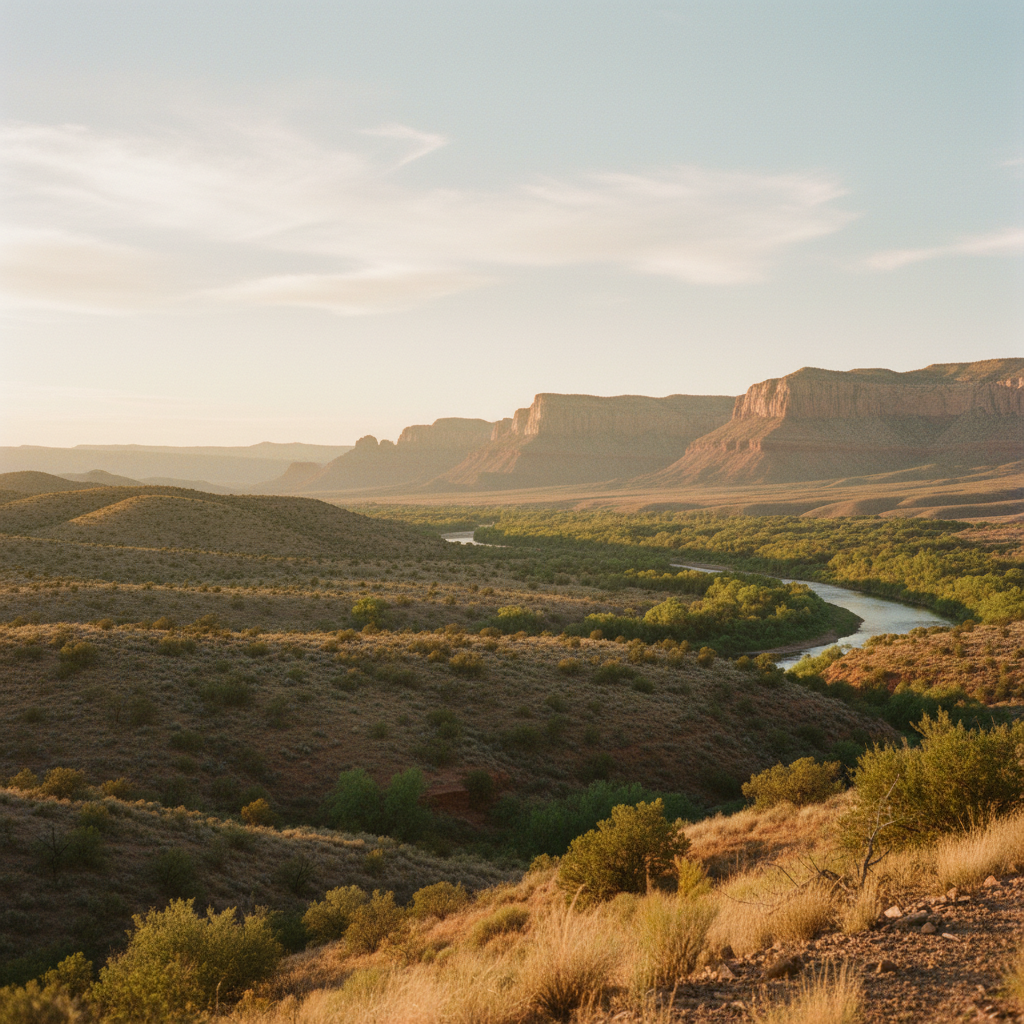
A lush riparian haven on the Verde River, featuring stocked lagoons, cottonwood glades, and a rich ranching history.
Dead Horse Ranch State Park spans 423 acres of lush riparian corridor along the Verde River, positioned at an elevation of 3,300 feet in the Verde Valley. Unlike the arid desert landscapes commonly associated with Arizona, this park is defined by a dense canopy of Fremont cottonwoods and Goodding willows, which drops the local temperature noticeably. The park protects one of the last remaining large-scale riparian habitats in the state, a vital green ribbon that has supported life for centuries. Long before it became a park, the Sinagua people farmed this fertile floodplain, leaving behind archaeological sites like the nearby Tuzigoot National Monument. Today, the river and its surrounding wetlands serve as a crucial sanctuary for diverse wildlife, including river otters, gray foxes, javelinas, and more than 200 species of birds that utilize the valley as a migratory flyway.
The unusual name of the park dates back to the late 1940s, when the Calvin "Cap" Ireys family arrived from Minnesota in search of a ranch to buy. While touring local properties, the children discovered a dead horse lying near the road of one particular parcel. When their father later asked which ranch they preferred, the children unanimously chose "the one with the dead horse." The Ireys family purchased the property in 1950 and maintained the name. When they agreed to sell the land to the Arizona State Parks Board in 1973, they made retaining the name a strict condition of the sale. The park officially opened to the public on June 1, 1977, preserving both the unique family legacy and the critical river access for future generations.
Visitors to the park can explore a network of more than 20 miles of non-motorized trails. The Canopy Trail offers an easy stroll under the shade of giant cottonwoods along the riverbank, while the longer Lime Kiln Trail follows an old historic route, connecting the park to Red Rock State Park near Sedona. For water recreation, three developed lagoons serve as the centerpiece of the park's day-use area, stocked regularly with rainbow trout in the winter and channel catfish in the summer. Kayakers and canoeists frequently paddle these quiet waters or launch directly into the Verde River for scenic float trips. Overnight options are extensive, featuring more than 100 spacious campsites across loops like Cooper's Hawk, alongside eight rustic, air-conditioned log cabins situated in a quiet mesquite bosque near the river.
For prime birdwatching, walk the Canopy Trail early in the morning to spot some of the 200 species of birds, including yellow-breasted chats and summer tanagers, nesting in the Fremont cottonwoods.