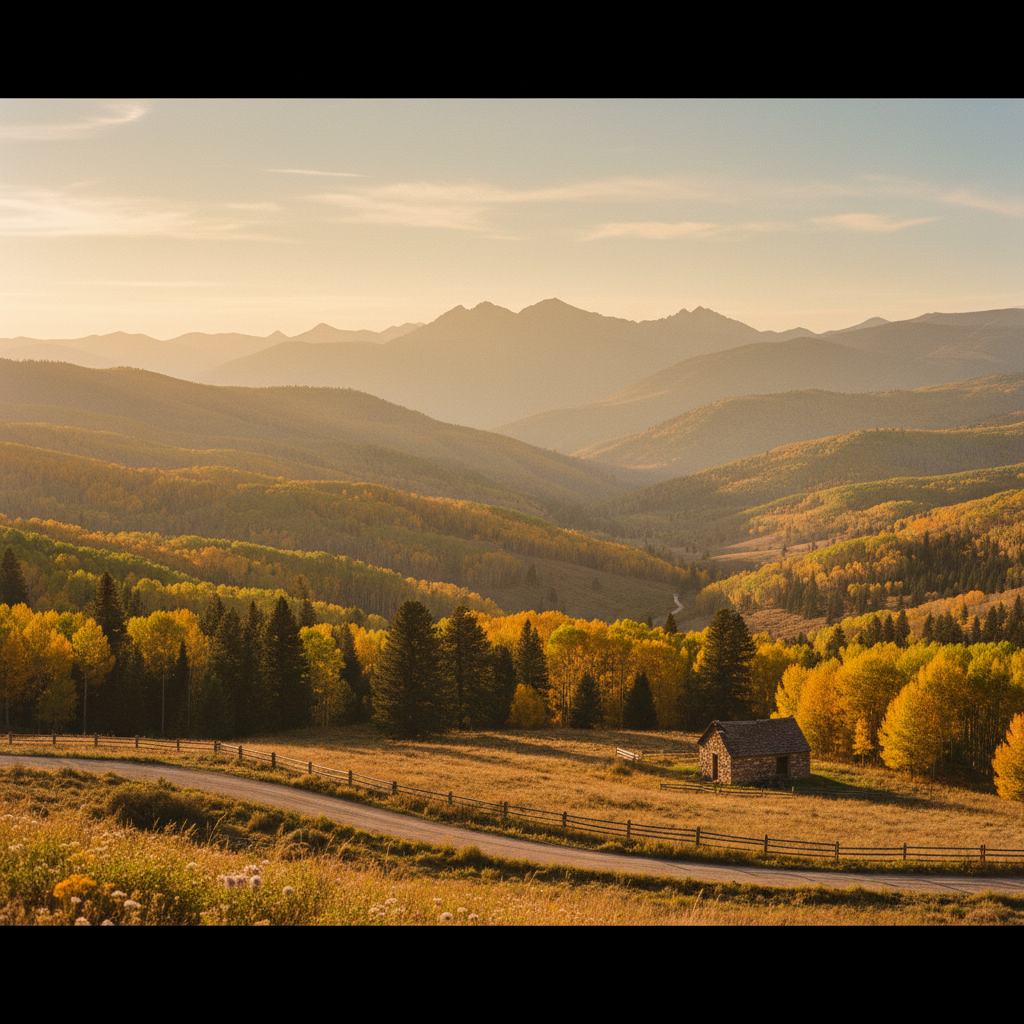
A 12,119-acre state park in Colorado's Front Range foothills, featuring historic homesteads, panoramic Continental Divide views, and miles of multi-use trails.
Golden Gate Canyon State Park, established in 1960 as Colorado’s second state park, encompasses 12,119 acres of dense montane forest, rocky peaks, and high-altitude meadows. Located in Gilpin and Jefferson counties, the park takes its name not from the famous California landmark, but from the historic 1859 gold rush community of Golden Gate City, which was named in honor of early prospector Thomas Golden. The land still holds the physical remnants of its homesteading era. In Frazer Meadow, the 1869 cabin and barn of John Frazer, a former Black Hawk miner, stand as weathered pine monuments in a grassy clearing. Nearby, the Tallman Ranch, featuring an 1882 homestead house overlooking a quiet pond, became part of the park in 1970. These historic structures offer a window into the late nineteenth century, when settlers claimed 160-acre parcels under the Homestead Act.
Geologically, the park is defined by Precambrian granite and gneiss, ancient rock formations that shape the steep ravines, rounded ridges, and dramatic outcroppings like Tremont Mountain. This rugged terrain supports a classic montane ecosystem ranging from 7,400 to 10,400 feet in elevation. In the lower elevations, ponderosa pine and Rocky Mountain juniper dominate the dry slopes, transitioning to dense stands of Douglas fir, lodgepole pine, and Engelmann spruce higher up. Extensive groves of quaking aspen colonize areas of past disturbance, painting the hillsides in brilliant gold and orange during the autumn months. This diverse habitat provides sanctuary for a robust array of wildlife. While mule deer and elk are common sights in the meadows at dawn, lucky visitors may also spot black bears, mountain lions, bobcats, or even moose, which have increasingly established a presence in the park's wetland and riparian zones along Ralston, Nott, and Deer creeks.
Recreational opportunities span more than 35 miles of trails, with 27 miles open to mountain bikes and horses. The Horseshoe Trail climbs through aspen forests to connect with the Mule Deer Trail, leading hikers to the high, rocky ridges of the Black Bear Trail for expansive views of Mount Blue Sky (formerly Mount Evans) and the distant peaks of Grays and Torreys. For a panoramic vista of 100 miles of the Continental Divide, visitors head to the Panorama Point Scenic Overlook, a popular vantage point accessible by both trail and road. Overnight stays are accommodated at two primary campgrounds: Reverend’s Ridge, which features 97 campsites with electrical hookups, six cabins, and two yurts, and the tent-only Aspen Meadows Campground. For a deeper immersion, the park offers 20 backcountry tent sites and four three-sided shelters accessible only by foot. Those seeking more refined historic lodging can reserve the Harmsen Ranch Guest House, a restored four-bedroom ranch house situated on a 40-acre meadow that was originally known as the Lazy Squaw Ranch before its acquisition by Bill and Dorothy Harmsen in 1954.
To avoid the heavy autumn crowds at Panorama Point, hike the Horseshoe-Mule Deer loop early in the morning during the late September aspen peak, or book one of the park's year-round yurts at Reverend's Ridge for a quiet winter snowshoeing getaway.