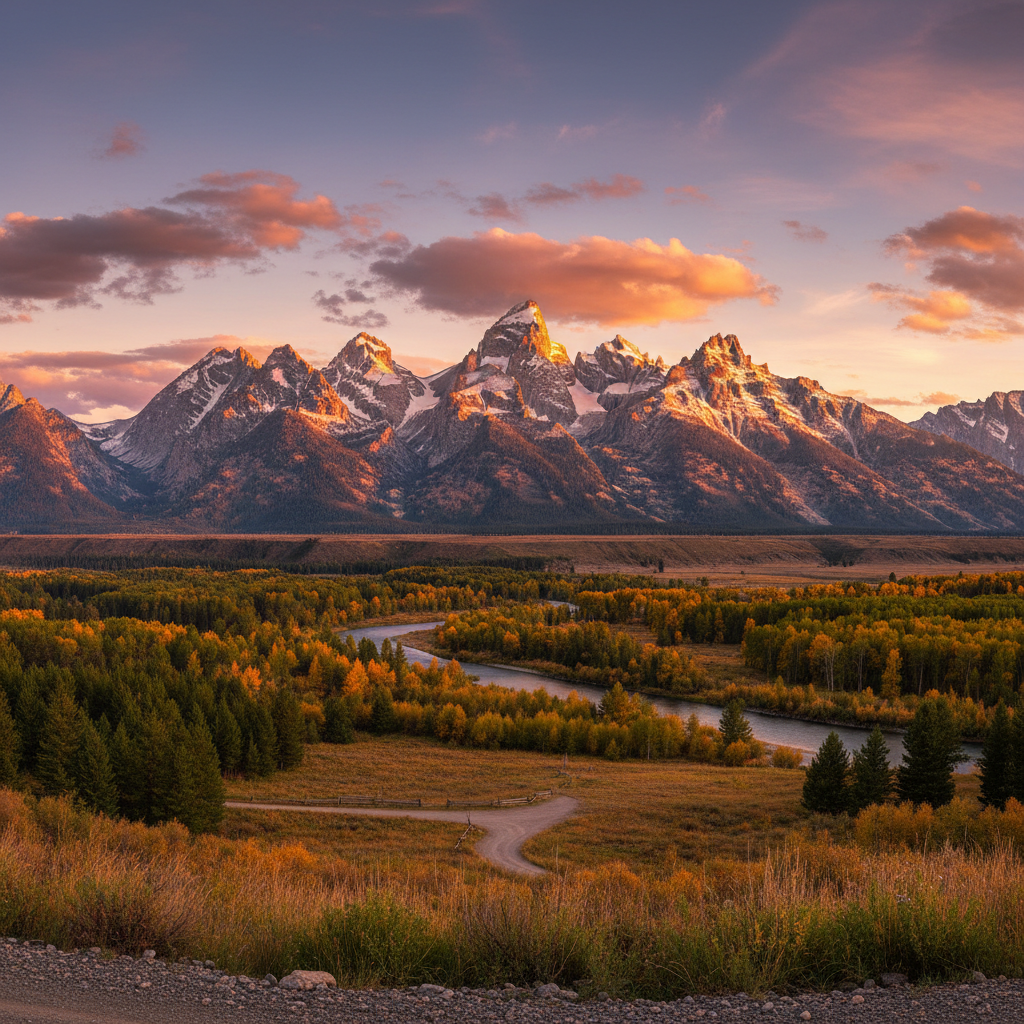
Grand Teton National Park rises abruptly from the valley floor of Jackson Hole, presenting one of the most dramatic mountain fronts in North America. The Teton Range — a 40-mile fault-block uplift — gains over 7,000 feet in just a few horizontal miles, with no foothills to soften the transition. Glacial lakes, winding rivers, and sagebrush flats create a foreground that photographers and visitors return to year after year.
Late June through September offers the best combination of open roads, accessible trails, and good weather. July and August are peak season with all facilities open and wildflowers blooming. September brings fall color, elk rut, and dramatically fewer crowds. Early June can still have snow on high trails.
2–3 days is ideal for most visitors. Day 1: Teton Park Road, Jenny Lake area, and Cascade Canyon hike. Day 2: sunrise at Schwabacher Landing or Oxbow Bend, then Signal Mountain and Jackson Lake. Day 3: Moose-Wilson Road, Laurance S. Rockefeller Preserve, and any remaining hikes.
Yes — the south entrance of Yellowstone is only 10 miles north of Jackson Lake Junction in Grand Teton. The two parks share a boundary with no gap. Many visitors combine both parks, but plan at least 2 days for each to avoid rushing.
No timed-entry or vehicle reservations are required. Backcountry camping permits can be reserved starting January 5. Lodging (Jenny Lake Lodge, Signal Mountain Lodge) books months in advance for summer. The Jenny Lake Boat Shuttle is first-come, first-served.
Jackson Hole Airport (JAC) is the closest — it is actually located inside the park, just 15 minutes from Moose Junction. Idaho Falls (IDA) is about 2 hours away and often has cheaper flights. Salt Lake City (SLC) is 5 hours.