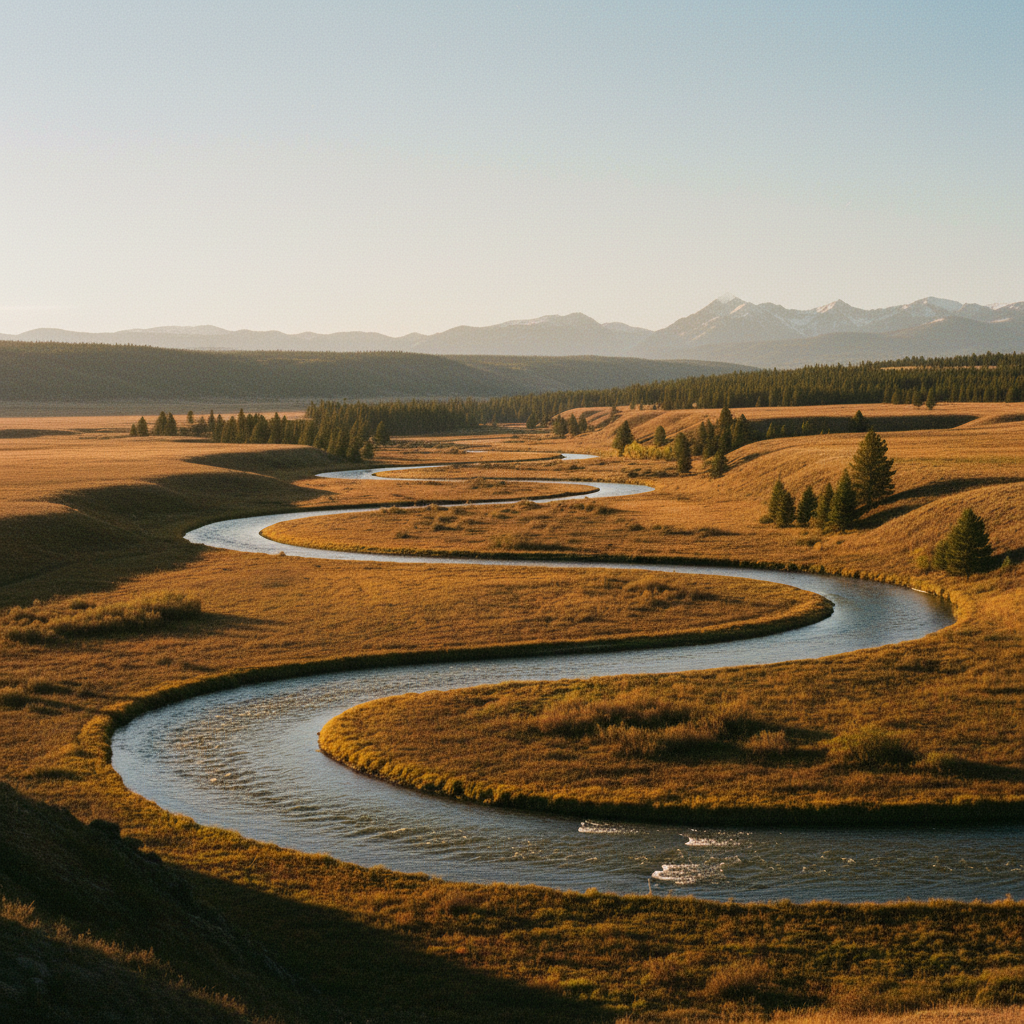
Flowing from the volcanic Yellowstone plateau, Henry's Fork of the Snake River is a legendary dry-fly fishery celebrated for its selective wild trout, diverse river sections, and prolific insect hatches.
Henry's Fork of the Snake River, also known as the North Fork, originates at the massive natural outlet of Big Springs and the high alpine waters of Henrys Lake. Named for Colonel Andrew Henry, an early fur trader who explored the Snake River plateau in 1810 and built Fort Henry near present-day St. Anthony, the 127-mile river is widely considered one of the premier dry-fly trout fisheries in North America. The watershed was historically the seasonal home of the Shoshone and Bannock peoples, who traveled to these higher elevations to fish, hunt, and gather obsidian. Today, the river's cold, nutrient-rich currents flow through a diverse geology of volcanic basalt, lodgepole pine forests, and wide-open meadows, supporting robust populations of wild rainbow trout, Yellowstone cutthroat trout, and elusive brown trout.
Below the Island Park Dam lies the Box Canyon, a fast-flowing, boulder-strewn canyon where nymphing is supreme. Here, anglers drift heavy stonefly and caddis nymphs through deep pockets and slots, targeting hard-fighting rainbow trout that thrive in the highly oxygenated water. Below the Box Canyon, the river transitions dramatically into the legendary Harriman Ranch section, also known as the Railroad Ranch. This seven-mile stretch of slow, glassy water meanders through a wide meadow, presenting what many consider the ultimate test of dry-fly angling. The trout here are famously selective, sipping tiny blue-winged olives, pale morning duns, and large green drakes from the surface. Fooling these wild fish requires long, delicate leaders, precise presentations, and an intimate knowledge of the river's prolific insect hatches.
Further downstream, the river's character shifts again as it plunges over the spectacular volcanic shelves of Upper and Lower Mesa Falls before entering the lower river sections near Ashton. Here, the water warms slightly and becomes more accessible to drift boats, offering excellent float-fishing opportunities. The lower river is famous for its early-season salmonfly hatch, which begins in late May or early June, drawing massive rainbows and migratory brown trout to the surface to gorge on large stoneflies. Throughout the entire system, conservation remains a central theme, championed by the Henry's Fork Foundation, which has worked since 1984 to protect the water quality, flows, and wild fisheries of this iconic river. Whether wading the quiet flats of the Ranch or rowing a drift boat through the lower cottonwood-lined channels, the experience on Henry's Fork is defined by a deep respect for the resource and the timeless challenge of matching the hatch.
When fishing the challenging Harriman Ranch section, prioritize presentation over fly pattern, using long, fine leaders of 12 to 15 feet to avoid spooking the highly selective, surface-feeding rainbow trout.