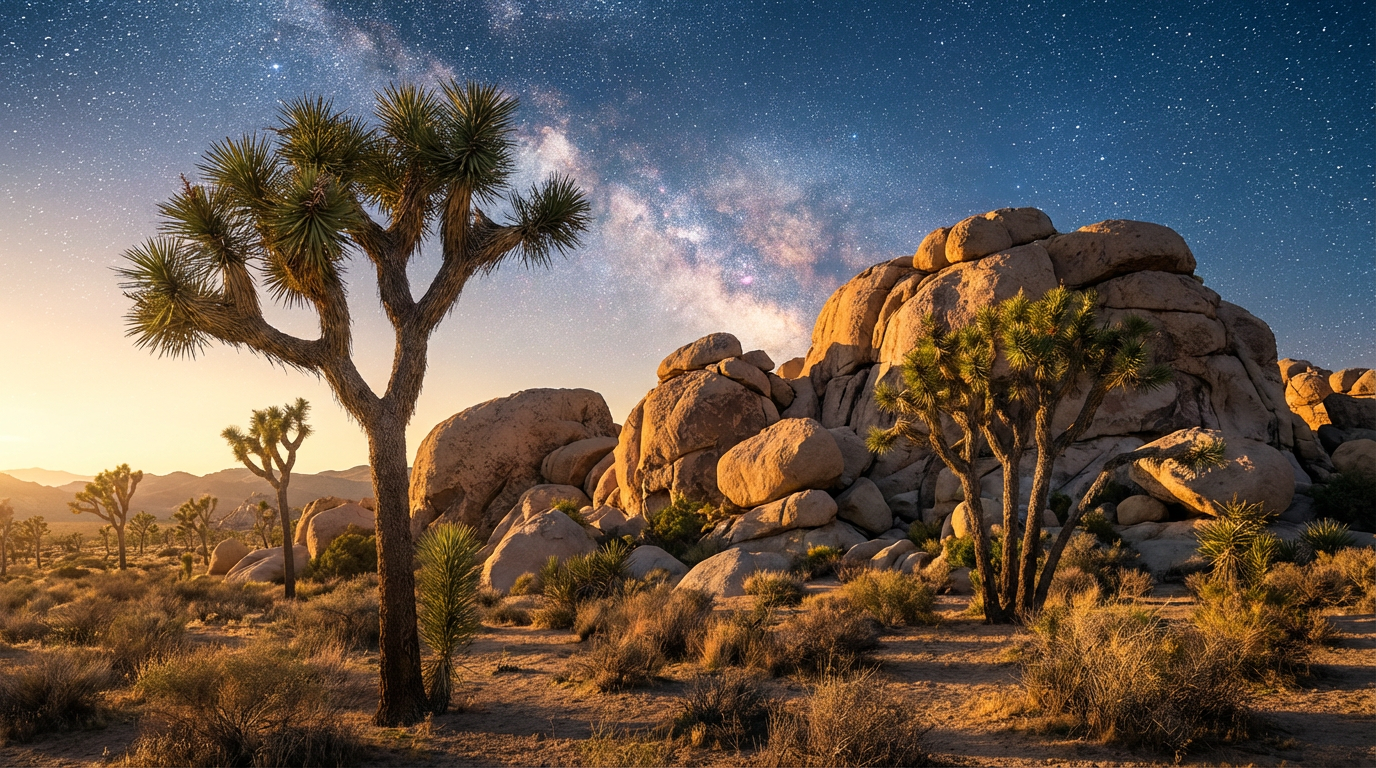
Joshua Tree National Park sits at the ecological crossroads of the Mojave and Colorado deserts, defined by twisted Joshua tree forests, surreal monzogranite boulder piles, and some of the darkest skies in southern California. The park's 800,000 acres span a 3,000-ft elevation gradient that creates two distinct desert ecosystems within a single boundary.
February, March, and November are the sweet spots. Spring (Feb-Mar) brings wildflower blooms, comfortable 70°F daytime temperatures, and the best rock climbing conditions. November offers similar temperatures with smaller crowds and peak dark-sky conditions for stargazing. Avoid June through August entirely — daytime temperatures exceed 100°F with zero shade on any trail, and the park is effectively dangerous for extended outdoor activity.
Two days covers the essentials: Day 1 for Park Boulevard highlights (Hidden Valley, Barker Dam, Skull Rock, Jumbo Rocks) and the Keys View sunset. Day 2 for Ryan Mountain at sunrise, then the Colorado Desert lowlands via Pinto Basin Road. Climbers and serious photographers should budget 3-4 days. The park is 45 minutes from Palm Springs, making day trips feasible, but camping inside the park (especially at Jumbo Rocks or Ryan Campground) is the definitive Joshua Tree experience.
October is excellent — it's the transition month when summer heat breaks and the climbing/hiking community returns. Expect daytime highs around 83°F dropping to 51°F at night. Crowds are moderate, campgrounds available without the spring-break competition. The Milky Way is visible in early evening, and low humidity makes for the sharpest star photography of the year. The only downside: rattlesnakes remain active through October, so watch your step on trails.