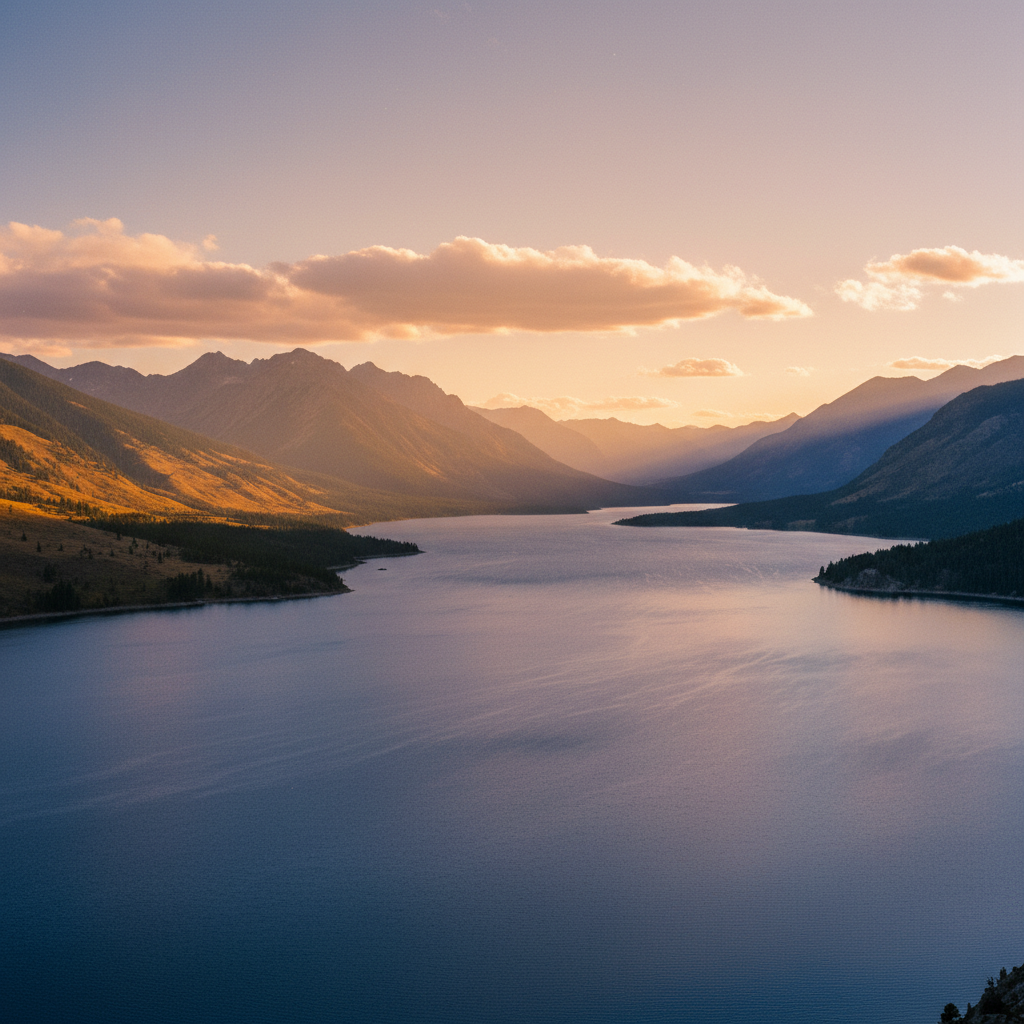
Spanning over 7,000 surface acres at an elevation of 8,280 feet, Lake Granby is a massive high-altitude reservoir on the Colorado River. Renowned for its self-sustaining lake trout fishery, deep water, and miles of shoreline, it is a premier destination for boaters, anglers, and campers under the shadow of the Continental Divide.
Lake Granby, the third-largest reservoir in Colorado, sits at an elevation of 8,280 feet within the Arapaho National Recreation Area. Completed in 1950 by the U.S. Bureau of Reclamation, this massive water body was created by impounding the headwaters of the Colorado River behind the 298-foot-tall earthfill Granby Dam. Today, the reservoir encompasses 7,256 surface acres and features over 40 miles of shoreline. It serves as the primary storage reservoir for the Colorado-Big Thompson Project, a massive trans-basin water diversion system designed to collect Western Slope snowmelt and carry it beneath the Continental Divide to the dry agricultural plains of the Front Range. From the reservoir, the Farr Pumping Plant lifts water 125 feet into the Granby Pump Canal, which then feeds into Shadow Mountain Lake and Grand Lake before entering the 13.1-mile Alva B. Adams Tunnel.
Below the surface, the reservoir's frigid depths plunge to 221 feet, creating an ideal habitat for cold-water fish. Lake Granby is renowned for holding the highest density of lake trout (mackinaw) documented in Colorado, sustained by a prolific population of introduced Mysis shrimp. These predatory lake trout frequently reach trophy sizes, with some specimens exceeding 30 pounds and measuring over three feet in length. The reservoir is also stocked with kokanee salmon, rainbow trout, and brown trout, making it a premier destination for sport fishing. During the summer, motorized and non-motorized boats launch from ramps at Sunset Point and Stillwater, while marinas like Beacon Landing and Indian Peaks offer boat rentals and slips. In the winter, from early January through April, the frozen surface becomes a major destination for ice fishing, with anglers setting up shelters to jig for lake trout in deep water.
Along the shoreline, the forest is dominated by stands of lodgepole and ponderosa pine, with the granite peaks of the Continental Divide rising sharply to the east. Campgrounds managed by the U.S. Forest Service, such as Arapaho Bay, Stillwater, and Sunset Point, provide more than 260 campsites right at the water's edge. Navigating the deep channels near the dam or casting from the rocky points of Cutthroat Bay reveals that the sheer scale of the reservoir ensures quiet corners are always within reach. A canal system allows boaters to travel directly from Lake Granby into Shadow Mountain Reservoir without removing their watercraft, offering miles of continuous high-altitude navigation. The scent of pine needles, the cold mountain breeze, and the steady lap of water against the gravel shores define the experience of this engineering marvel turned wilderness playground.
For trophy lake trout, target the deep humps and drop-offs in 35 to 120 feet of water near Cutthroat Bay or the pumping plant, using heavy jigs tipped with sucker meat.