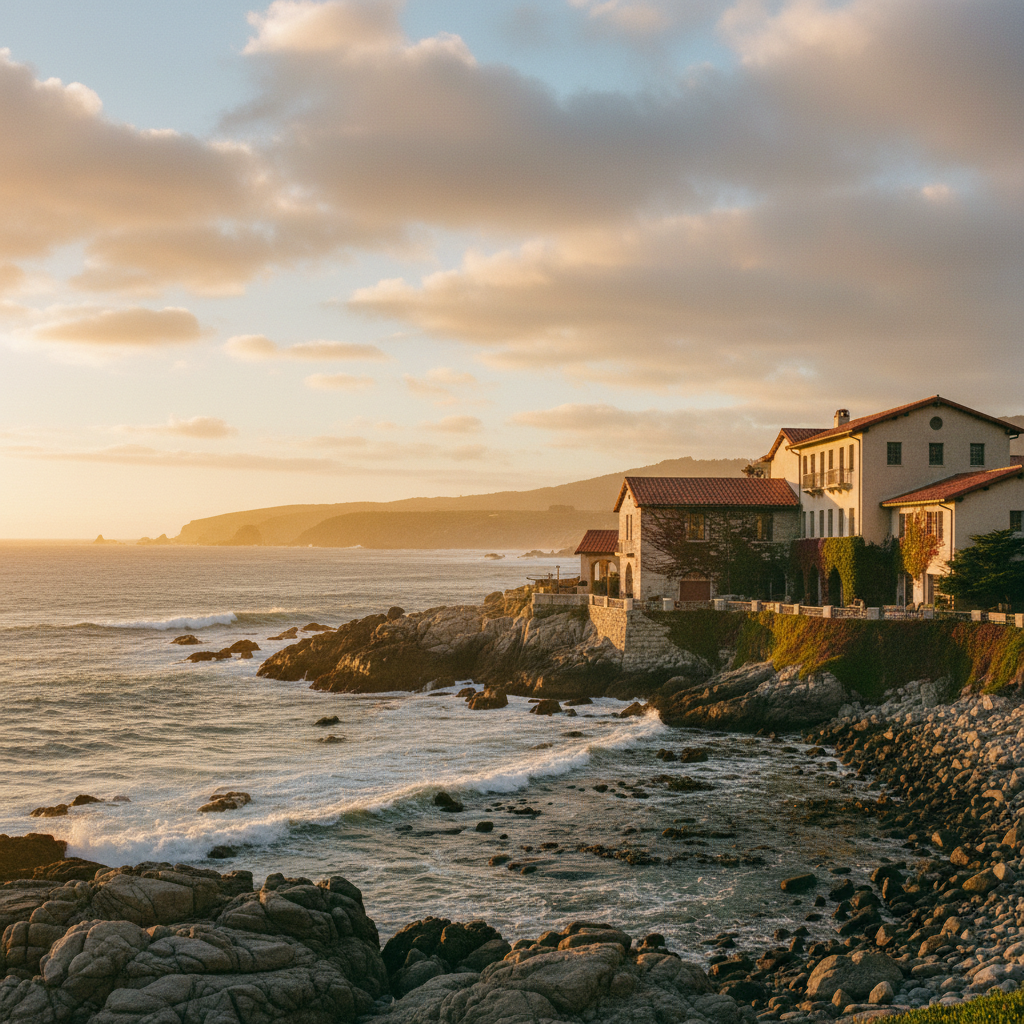
The Monterey Bay Aquarium is a world-renowned marine conservation and exhibition center built on the site of a historic Cannery Row fish packing plant. It offers an immersive look at the Pacific's underwater ecosystems, featuring a living giant kelp forest and massive pelagic exhibits fed directly by seawater from the adjacent bay.
The Monterey Bay Aquarium stands on the historic shoreline of Cannery Row, occupying the renovated footprint of the former Hovden Cannery. Founded in 1984 through a fifty-five million dollar gift from David and Lucile Packard, the facility was designed by architect Charles M. Davis of EHDD to mirror the industrial, multi-roofed character of the old canning district. Rather than isolating its exhibits from the surrounding Pacific, the building operates as an extension of the bay itself. A complex life support system pumps up to two thousand gallons of raw, unfiltered seawater per minute directly from the ocean, feeding the exhibits with natural nutrients and plankton. This continuous flow allows the aquarium to sustain delicate marine life that would otherwise struggle to survive in captivity, creating a direct physical link between the indoor galleries and the wild marine sanctuary just beyond the glass.
At the heart of the Ocean's Edge galleries is the Kelp Forest exhibit, a twenty-eight-foot-tall, three-hundred-and-forty-three-thousand-gallon tank that was the first in the world to successfully grow live giant kelp. This feat was accomplished by installing a custom wave machine at the top of the tank, which replicates the rhythmic surge of the Pacific and allows the kelp to absorb vital nutrients. Visitors can watch leopard sharks, rockfish, and bright orange garibaldi dart through the swaying amber fronds. Nearby, the two-story sea otter exhibit houses rescued Southern sea otters that are deemed non-releasable by wildlife authorities. These resident otters play a dual role, acting as ambassadors for their threatened species and serving behind the scenes as surrogate mothers to rehabilitate and raise orphaned wild pups before their release back into the nearshore kelp beds.
Further inside, the Open Sea gallery features a massive one-point-two-million-gallon tank that replicates the vast pelagic environment of the open ocean. A ninety-foot-long viewing window offers views of bluefin tuna, scalloped hammerhead sharks, and green sea turtles swimming through deep blue water, while a swirling school of sardines forms a glittering, silver circle overhead. The aquarium is also renowned for its pioneering work with delicate open-ocean invertebrates, particularly its mesmerizing jellyfish displays which showcase pulsing sea nettles and ethereal moon jellies. Beyond the physical exhibits, the institution serves as a global leader in marine conservation, particularly through its Seafood Watch program, launched in 1999 to guide consumers and businesses toward sustainable seafood choices.
To experience the Kelp Forest and Open Sea exhibits with fewer crowds, plan your visit for a Tuesday or Wednesday afternoon after 2:00 PM, when school groups have departed. Be sure to check the daily schedule for the sea otter feeding sessions, which offer an excellent opportunity to observe the aquarium's active conservation and training programs up close.