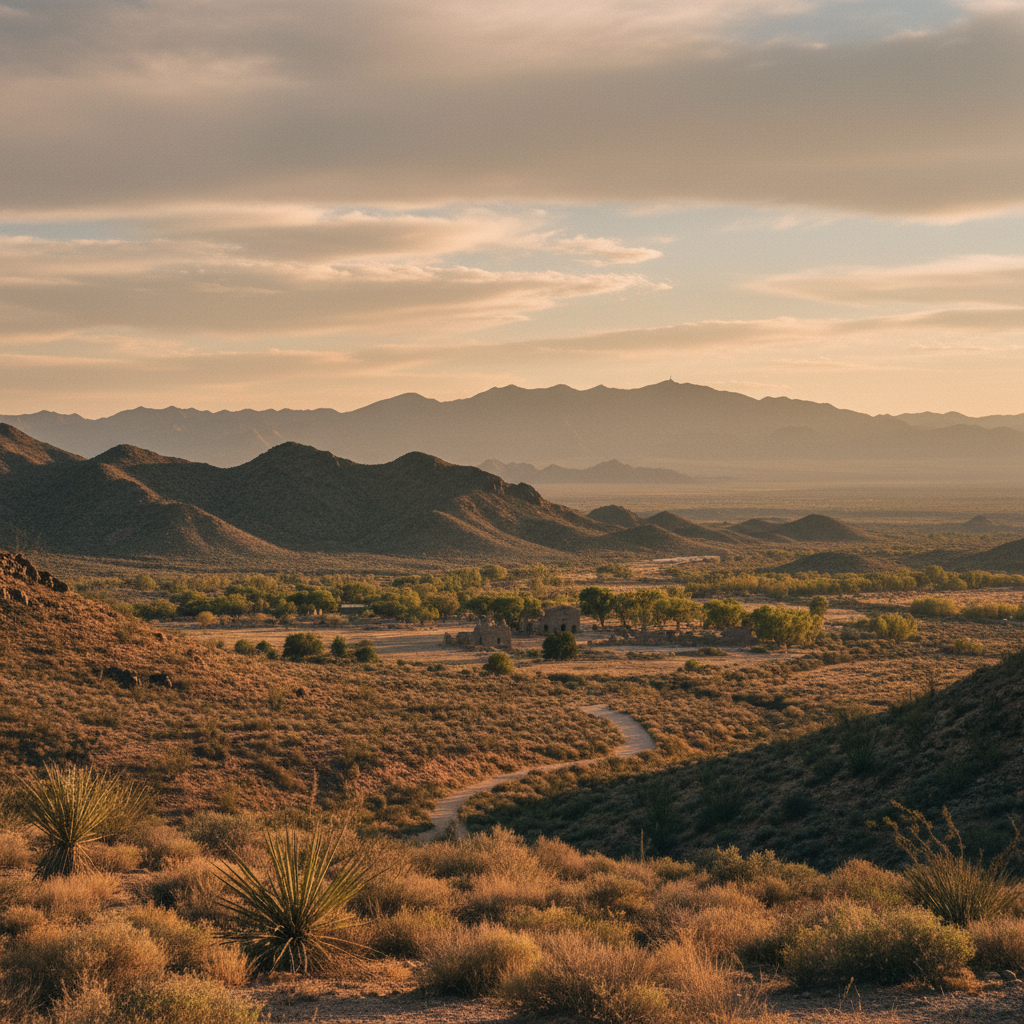
A historic desert oasis at the foot of the Sacramento Mountains, preserving ancient springs, a rugged canyon trail, and a late-nineteenth-century ranch.
Oliver Lee Memorial State Park sits at the base of the Sacramento Mountains, preserving a dramatic canyon oasis in the Chihuahuan Desert of southern New Mexico. Established in 1980, the 640-acre park is located in Otero County at an elevation of 4,400 feet. The dominant geological feature is Dog Canyon, a deep, sharp gash in the western escarpment where the sheer cliffs of the Bug Scuffle Limestone Member of the Gobbler Formation rise abruptly above the desert floor. This limestone was deposited more than 300 million years ago in a shallow marine environment. For thousands of years, a perennial stream flowing through the canyon has created a lush riparian oasis. This reliable water source made the canyon a vital haven for prehistoric Mogollon peoples, who left behind bedrock mortars used to grind seeds, and later for the Apache, who utilized the rugged canyon as an impenetrable stronghold during conflicts with Spanish, Mexican, and United States military forces.
The park's modern history is defined by the lives of two late-nineteenth-century settlers who vied for control of the canyon's water. Francois-Jean "Frenchy" Rochas, a reclusive French immigrant, arrived in the mid-1880s to build mortar-less stone walls, plant orchards, and raise cattle. He collaborated on water systems with Oliver Milton Lee, an influential and controversial Texas-born rancher who founded the Dog Canyon Ranch in 1893. Lee was a skilled marksman and state legislator who was later tried and acquitted for the high-profile disappearance and suspected murder of rival lawyer Albert Jennings Fountain and his young son. Visitors can explore this turbulent frontier era through Lee's reconstructed adobe ranch house, which served as his headquarters from 1893 to 1907. The home is authentically furnished to reflect late-nineteenth-century ranch life, though guided tours are subject to seasonal availability and ongoing preservation efforts.
Recreational opportunities at the park center on its contrasting trail systems and desert campground. The Riparian Nature Trail is an easy, half-mile loop beginning near the visitor center, following the stream under the shade of mature cottonwoods where ferns and wild grapevines cling to the damp rocks. For a far more demanding trek, the Dog Canyon National Recreational Trail climbs steeply up the north wall of the canyon, leaving the state park boundaries to enter the Lincoln National Forest. This strenuous trail ascends over 3,000 feet of elevation across 5.5 miles one way, passing the stone ruins of Frenchy's high-altitude line cabin on the grassy "Second Bench" before continuing toward a forest service road. The park's campground contains both developed and primitive sites situated among desert flora like ocotillo, yucca, and creosote, providing exceptional vantage points to watch the evening light shift across the Tularosa Basin toward White Sands National Park.
To tackle the grueling Dog Canyon Trail, start at first light to avoid the intense heat on the unshaded, rocky switchbacks. Early morning also offers the crispest, clearest views of the white gypsum dunes in the basin below.