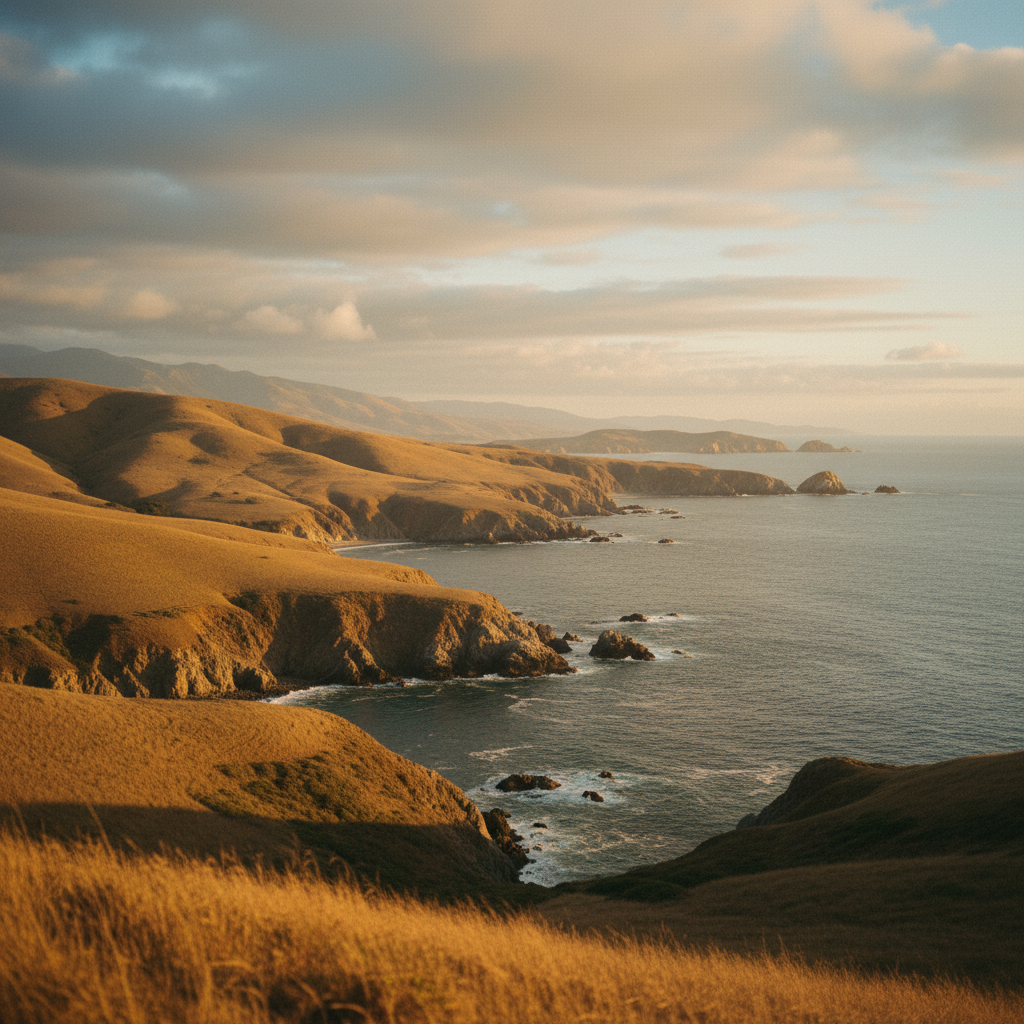
California's largest island rises twenty miles off the coast of Ventura, offering a rugged expanse of deep canyons, sea caves, and endemic wildlife managed under a unique conservation partnership.
Santa Cruz Island, known as Limuw ("in the sea") to the Chumash people, is California's largest island, encompassing 96 square miles of rugged mountain ranges, deep canyons, and sheer sea cliffs twenty miles off the coast of Ventura. The island's ownership is divided, with The Nature Conservancy managing the western 76 percent and the National Park Service overseeing the eastern 24 percent. This dual stewardship preserves a landscape of remarkable ecological diversity, ranging from coastal sage scrub and grasslands to groves of rare Bishop pines and island ironwood. The island's highest point, Devils Peak, rises 2,450 feet above the ocean, anchoring a dramatic topography that has earned the archipelago the moniker "Galapagos of North America".
Human history runs deep across the island's canyons and shorelines. For millennia, the Chumash thrived here, establishing at least ten permanent villages, including Swaxil, which once stood near modern-day Scorpion Anchorage. The islanders were master boatbuilders, crafting ocean-going plank canoes called tomols to navigate the Santa Barbara Channel, and they produced shell-bead money from chert that became the primary currency for tribes across California. In the 19th and 20th centuries, European and American settlers transformed the island into a massive sheep and cattle ranching operation. Today, the remnants of this ranching era, including historic adobe houses, barns, a blacksmith shop, and a small stone chapel, still stand as silent witnesses to the island's agricultural past.
Because of its long isolation from the mainland, the island is a sanctuary for unique evolutionary adaptations. The island fox, a diminutive carnivore roughly the size of a house cat, roams the campgrounds and trails, having successfully rebounded from near-extinction after intensive conservation efforts removed feral pigs and golden eagles. In the oak woodlands and chaparral, the island scrub-jay, the only endemic bird species in the continental United States, displays island gigantism, being notably larger and more vibrantly blue than mainland scrub-jays.
For those arriving by ferry at Scorpion Anchorage or Prisoners Harbor, the island offers a raw encounter with the elements. Kayakers can paddle the coastal waters to explore intricate sea caves, including the massive Painted Cave on the northwest coast, which stretches 1,227 feet into the volcanic rock with an entrance rising 160 feet high. Snorkelers can plunge into the cold, nutrient-rich waters to swim through towering kelp forests teeming with bright orange Garibaldi, while hikers can follow trails like the Pelican Bay Trail or the path to Potato Harbor, where high bluffs overlook the churning Pacific.
Book your ferry with Island Packers well in advance, and pack all your own water and food, as there are no services on the island. If you want to see the island scrub-jay, plan your landing at Prisoners Harbor, where they are more commonly spotted in the oak canopy than at Scorpion Anchorage.