A high-altitude glamping retreat in the Giant Sequoia National Monument, offering comfortable canvas tent cabins, five-course open-air dinners, and direct trail access after a short hike in.
Sequoia High Sierra Camp occupies a unique 40-acre private enclave grandfathered into the Giant Sequoia National Monument, positioned at an elevation of 8,282 feet on a steep, forested hillside near the border of Sequoia and Kings Canyon National Parks. Founded by Memphis businessman Burr Hughes, an architect who studied sustainable design at the University of Cambridge, the camp was intentionally constructed to leave a minimal ecological footprint. Hughes designed the structures using principles of organic architecture and historic national park style, often called parkitecture, ensuring that no old-growth trees were removed during the six years of planning and construction. The camp operates entirely off the grid, relying on a quiet, low-emission generator for the kitchen, solar-powered path lighting, and propane lanterns to illuminate the canvas bungalows at night, with half of the private acreage permanently set aside as protected wetlands.
The camp features 32 deluxe canvas tent cabins, each measuring a spacious 330 square feet (14 by 24 feet) and erected on permanent wooden platforms among a forest of red fir and lodgepole pine. These structures feature wood and metal frames covered with sustainably grown natural cotton canvas, offering expansive views of Kings Canyon and the Monarch Divide. Inside, the rustic but refined interiors are outfitted with artisan-crafted wooden furniture, Native American-style rugs, and cozy beds (either king-size or twin configurations) topped with high-thread-count sheets, feather duvets, and woolen blankets. Guests share a centralized bathhouse facility that balances wilderness immersion with modern comfort, offering private hot-water shower stalls, dressing areas, flush toilets, and eco-friendly toiletries, allowing for a thorough hot shower under a canopy of pine branches after a day on the trails.
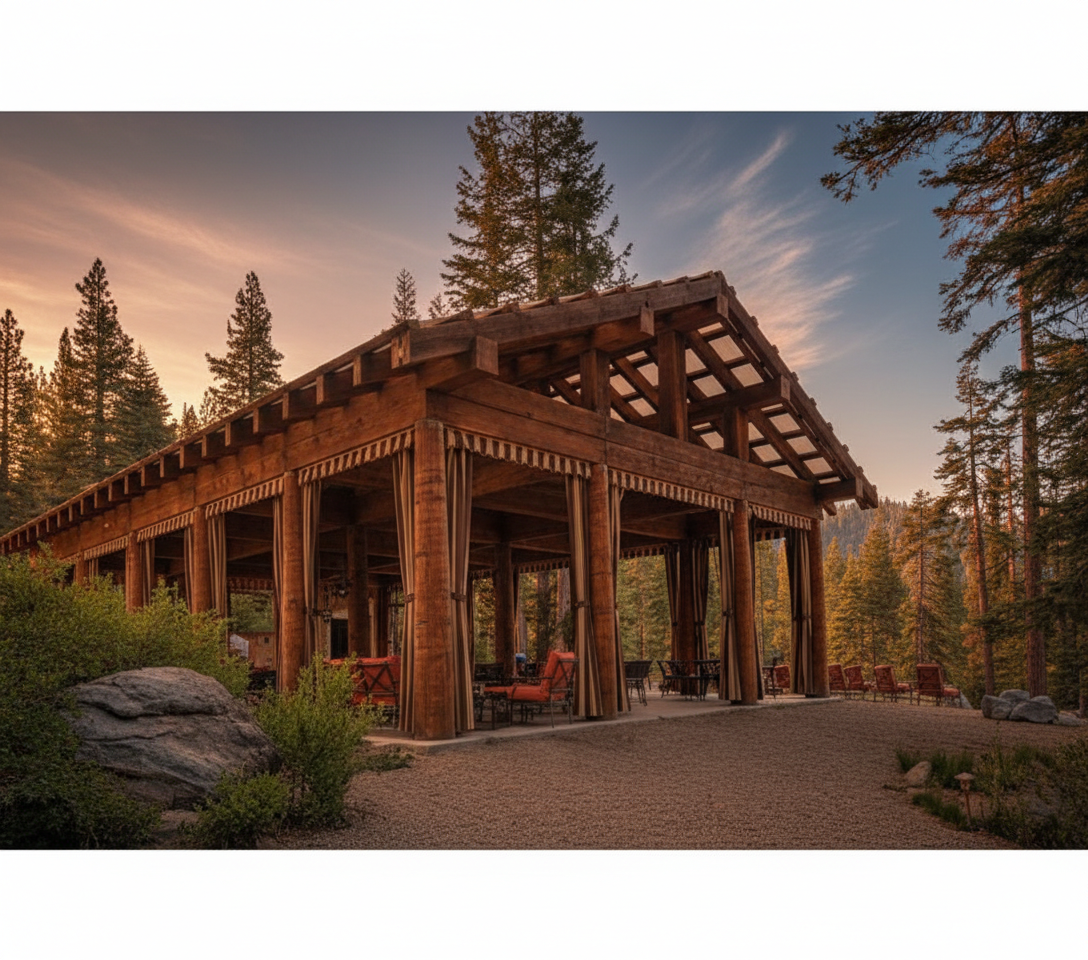
Dining at the camp centers around a massive, open-air wooden pavilion, which Hughes designed with support pillars made of sustainable fir timber, inspired by the architecture of an Etruscan temple. Overnight stays include three daily meals prepared by a professional chef who crafts high-end California and Mediterranean-inspired cuisine using sustainable, locally sourced ingredients. Mornings begin with a robust buffet featuring fresh fruit, house-made granola, and vegetable frittatas, while lunch is a pack-your-own picnic of deli meats and cheeses designed to sustain day hikes. Evenings feature five-course dinners served family-style at large communal tables, with dishes such as Gorgonzola filet mignon, braised lamb shanks, and rack of Colorado lamb, followed by freshly baked desserts like chocolate molten cake or berry shortcake. To preserve the remote atmosphere, guests must hike to the camp, choosing either an easy one-mile walk from the Marvin Pass trailhead off Big Meadows Road or a challenging 11-mile trek along the Twin Lakes Trail from Lodgepole Campground, ensuring the mountain quiet remains undisturbed by vehicles.
Bring a headlamp for navigating the gravel paths between your canvas cabin and the shared bathhouse after dark, and pack a warm layer, as temperatures at 8,200 feet routinely plunge into the 40s after sunset.
Where to Stay — Curated accommodations hand-picked by Basecamp West. Glamping, boutique hotels, historic lodges, and unique stays across the American West.