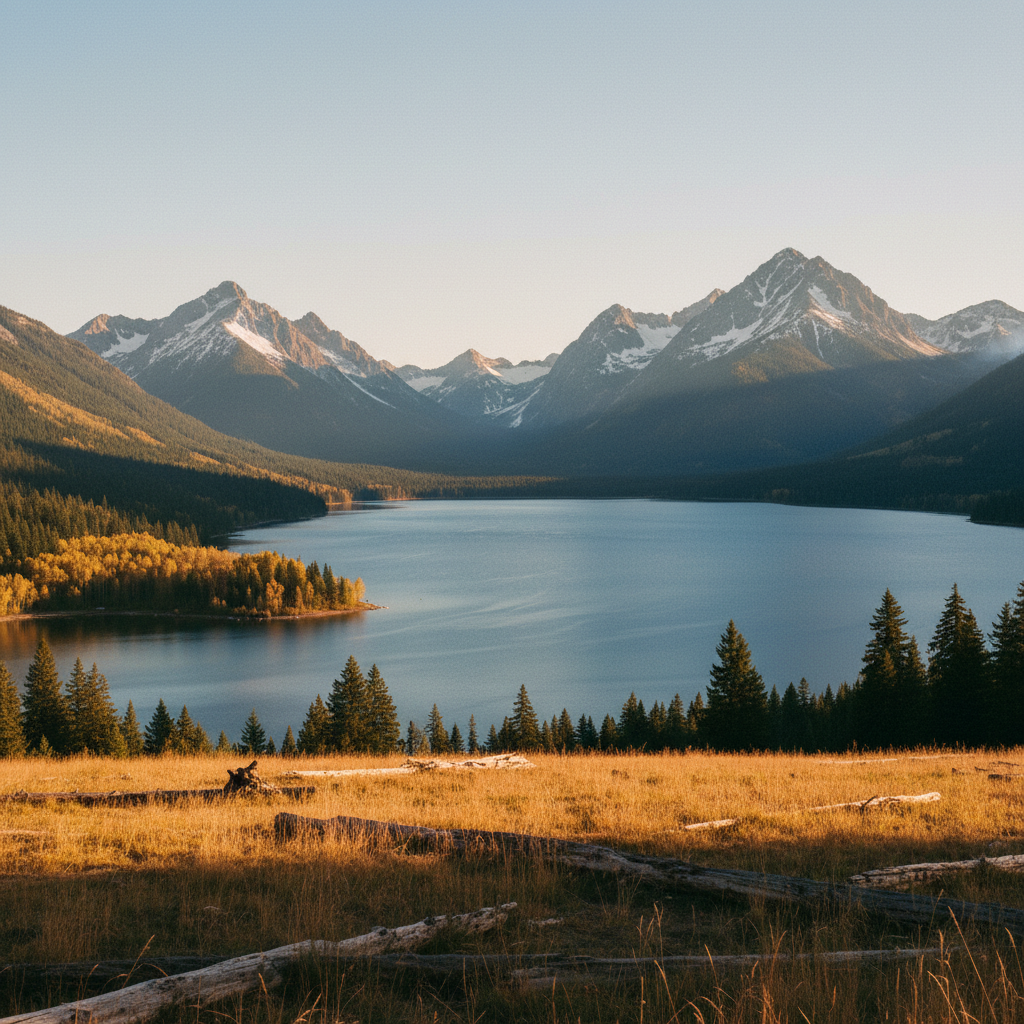
A glacier-carved haven at the southern tip of Wallowa Lake, serving as a forested base camp for alpine hikes and cold-water paddling.
Wallowa Lake State Park occupies a prime, 165-acre forested shelf at the southern tip of Oregon's deepest natural lake, where the Wallowa River empties into the glacier-carved basin. Dedicated in 1951, the park was established to guarantee public access to this pristine alpine water, which is held in place by massive, 900-foot-tall lateral moraines. These parallel ridges of rock and soil were deposited by ancient Pleistocene glaciers as they receded from the high peaks of the Wallowas, creating a textbook terminal moraine lake. Cottonwoods, Douglas firs, ponderosa pines, and western larches shade the park grounds, casting cool shadows over grassy banks that look directly up at the jagged, snow-streaked granite face of Chief Joseph Mountain. Long before the park's mid-century development, this exact shoreline served as a crucial summer camp and fishing ground for the Wallowa band of the Nez Perce, or Nimiipuu, who gathered here to harvest kokanee salmon and hunt in the surrounding valleys.
The state park functions as a highly developed base camp for both water recreation and wilderness exploration. Its expansive campground features 121 full-hookup RV sites, 89 tent sites, and two yurts, organized across five distinct loops lettered A through E. Loop D is particularly favored by tent campers because of its narrower, winding roads and dense tree cover, which restrict larger rigs and preserve a quieter, more rustic atmosphere. An off-leash dog area is located at the end of Loop A, while modern brick restrooms with hot showers and a small coin-operated laundromat are scattered throughout the loops. Along the park's eastern edge lies a sprawling, 60-acre day-use area that requires no parking fee. This riverside park is bordered by the cold, clear waters of the Wallowa River, where visitors gather in mid-September to witness the bright red kokanee salmon spawning in the shallows.
At the water's edge, the Wallowa Lake Marina provides a gateway to the lake's 299-foot depths. The marina offers boat slip rentals and a public boat ramp, alongside rentals for motorboats, pontoon boats, kayaks, and stand-up paddleboards. Anglers frequent these waters to fish for rainbow trout, lake trout (mackinaw), and kokanee, often launching early in the morning when the water is as flat as glass. For land-based adventures, the park is within walking distance of the Wallowa Lake Trailhead, which serves as a major portal into the 361,000-acre Eagle Cap Wilderness. From here, hikers can embark on challenging day hikes or multi-day backpacking trips up the East Fork Wallowa Trail toward Aneroid Lake, or follow the Chief Joseph Mountain Trail. This proximity to the high alpine country, combined with the immediate access to the water, makes the state park a highly sought-after destination where reservations are essential during the peak summer months.
If you are tent camping, reserve a site in Loop D, where the narrow roads and dense tree canopy block larger RVs and offer a quieter, more secluded experience. Alternatively, visit in mid-September to watch the brilliant red kokanee salmon spawn in the shallow gravel beds of the Wallowa River, which runs directly through the park's day-use area.