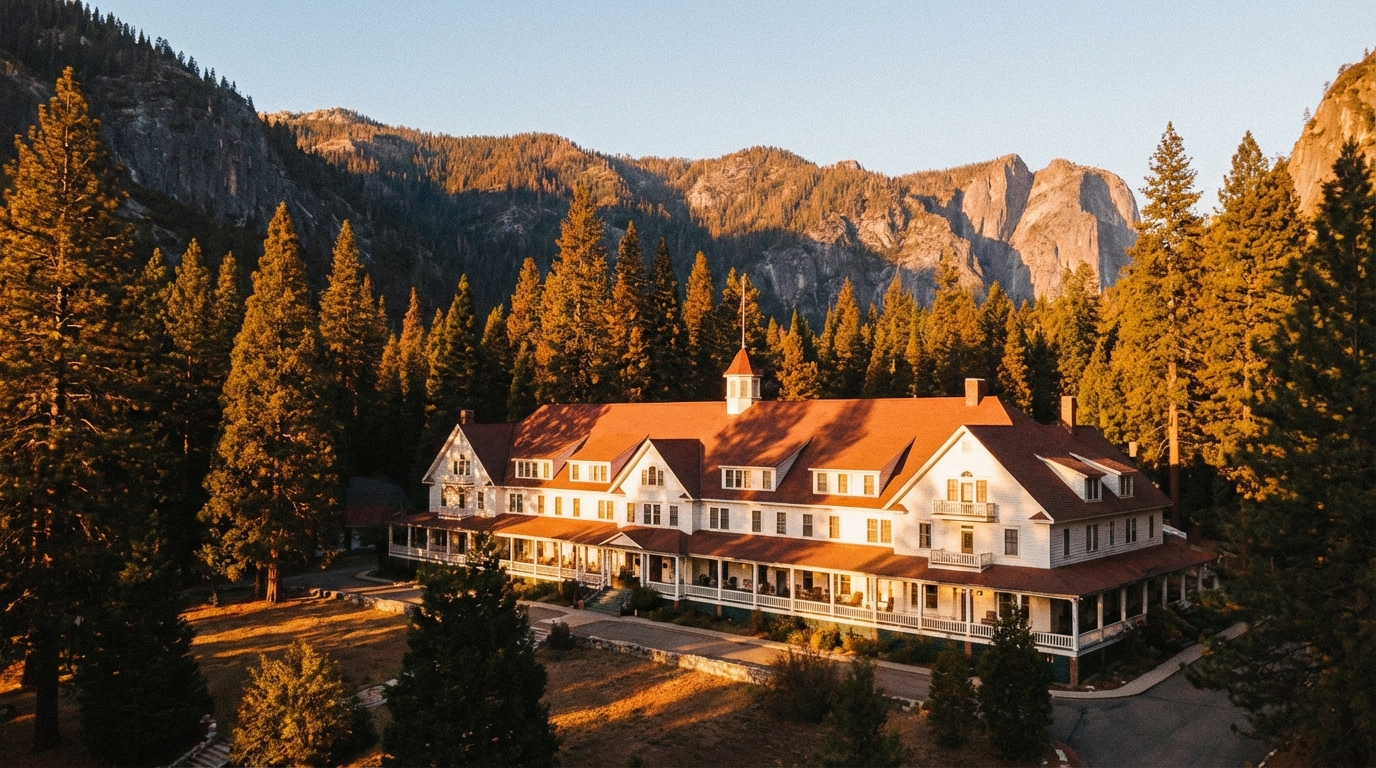
Dating to 1856, the historic Wawona Hotel is a Victorian-era landmark in southern Yosemite, defined by whitewashed buildings, wide wrap-around verandas, and a total absence of modern digital distractions.
The Wawona Hotel stands as one of the oldest and largest remaining Victorian-era mountain resorts in the United States, representing a century and a half of hospitality in the southern reaches of Yosemite National Park. Originally established in 1856 by former gold prospector Galen Clark, the property began as a humble log cabin known as Clark's Station, serving as a rest stop for weary travelers on their way to Yosemite Valley. In 1875, Clark sold the homestead to the Washburn brothers, who renamed the settlement Wawona, a name inspired by an Indigenous word for big trees. The main hotel building, constructed in 1879 to replace an earlier structure lost to fire, established the signature architectural style that defines the resort today: a series of whitewashed, New England-style buildings framed by expansive wrap-around verandas and green lattice trim.
The hotel complex consists of several historic structures, including Clark Cottage, which dates to 1876, Moore Cottage, Washburn Cottage, and the 1917 Annex. Across these buildings, the property offers 104 guest rooms designed to preserve the atmosphere of the late nineteenth century. Accommodations are divided between 50 rooms with private bathrooms, many featuring original clawfoot tubs, and 54 rooms that utilize shared, European-style facilities down the hallway. To maintain the historic peace of the mountain retreat, none of the rooms are equipped with televisions or telephones. Instead, the guest experience centers on the simple pleasures of the property, such as lounging in Adirondack chairs on the deep porches, listening to live piano music in the lounge, or dining in the wood-paneled dining room that has served generations of visitors.
Throughout its long history, the Wawona Hotel has hosted a distinguished roster of guests, including Presidents Ulysses S. Grant, Rutherford B. Hayes, and Theodore Roosevelt, as well as the painter Thomas Hill, whose nearby studio still stands on the grounds. Beyond the lodging quarters, the 16.5-acre property features a historic nine-hole golf course and a seasonal outdoor swimming pool, both of which opened in 1918. In December 2024, the National Park Service initiated an indefinite closure of the hotel complex to conduct a comprehensive condition assessment. This closure, prompted by the discovery of significant structural deterioration and rot during a routine roof replacement project, ensures that the integrity of these historic timber structures will be preserved for future generations. While the doors remain closed to overnight guests during this extensive restoration period, the whitewashed buildings continue to stand as a testament to the early days of California tourism.
While the hotel is temporarily closed for structural assessments, visitors can still stroll the grounds to view the historic 1879 main building and the adjacent Thomas Hill Studio.
Where to Stay — Curated accommodations hand-picked by Basecamp West. Glamping, boutique hotels, historic lodges, and unique stays across the American West.