Sleep in a historic concrete teepee along Route 66, surrounded by vintage cars and original hickory furniture.
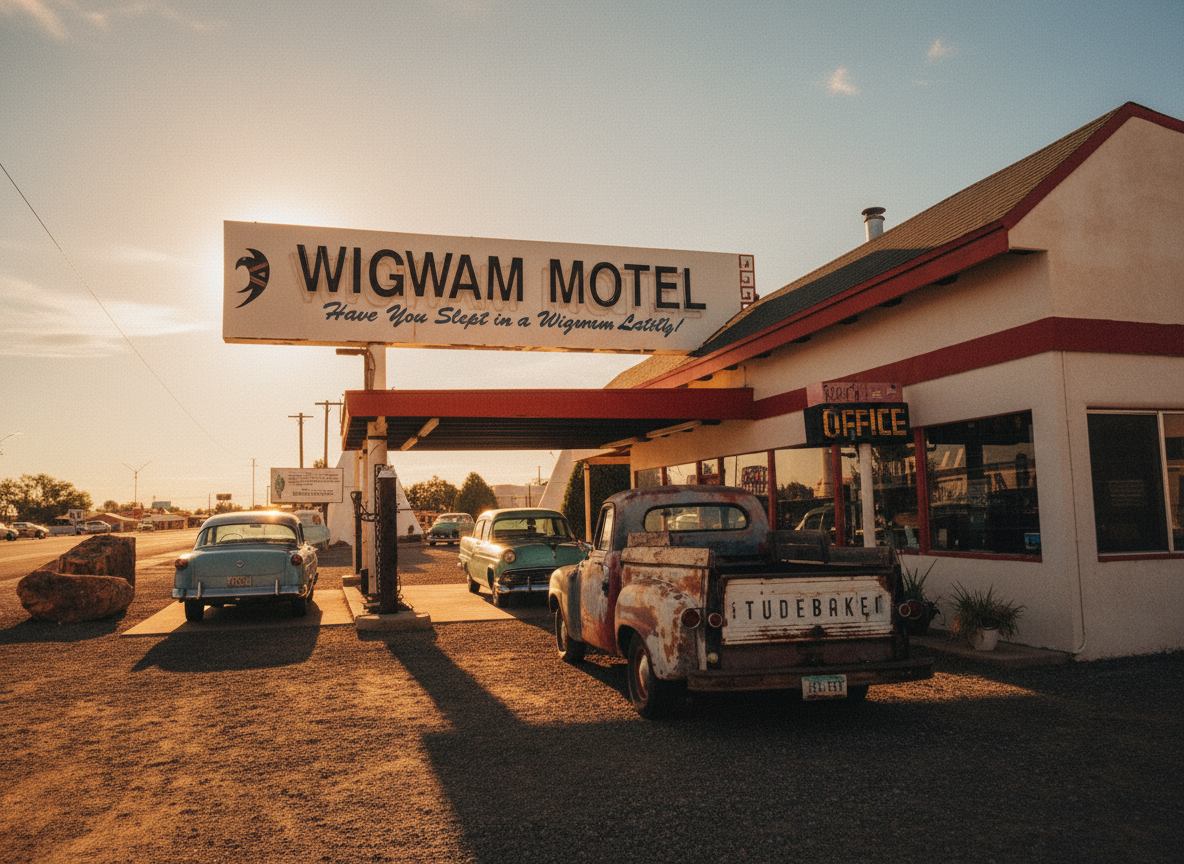
Wigwam Village No. 6 stands as a stark, white, concrete-and-steel monument to the golden age of American roadside travel along historic Route 66 in Holbrook, Arizona. Established in 1950 by Chester E. Lewis, this iconic motel consists of fifteen freestanding, teepee-shaped sleeping units arranged in a wide semi-circle around a central office. Painted in brilliant white with bold red zigzags near their peaks, these thirty-two-foot-tall structures present a striking silhouette against the vast, dry Arizona sky. Vintage mid-century automobiles, including a Studebaker once owned by Lewis himself, are permanently parked on the gravel lot in front of the individual teepees, creating an immersive time-warp effect. At dusk, the original red-and-green neon sign buzzes to life, casting a warm glow over the property and signaling to travelers that they have arrived at one of the most celebrated roadside landmarks in the American West.
The concept behind the motel was patented in the 1930s by architect Frank A. Redford, who built the first Wigwam Village in Horse Cave, Kentucky. Redford mistakenly used the term "wigwam" to describe his conical concrete structures, which actually resemble the tipis of the Plains Indians rather than the domed shelters used by northeastern tribes. Captivated by the design during a 1938 trip through Kentucky, Lewis purchased the rights to Redford's plans and name through a unique royalty agreement: Lewis installed coin-operated radios in each room, and every dime inserted for thirty minutes of music was sent directly to Redford as payment. The Holbrook location was the sixth of seven original villages built across the country, and it remains one of only three still standing today. After Interstate 40 bypassed downtown Holbrook in the late 1970s, the motel closed and fell into disrepair, but Lewis's wife, Idalia, and their children, Clifton, Paul, and Elinor, repurchased and meticulously restored the property, reopening it in 1988.
Inside, the accommodations remain stubbornly and delightfully authentic, eschewing modern luxuries in favor of mid-century simplicity. Each teepee features original, restored hickory furniture handcrafted by the Old Hickory Furniture Company of Indiana, alongside two double beds, a small bathroom with a shower, a television, and a window-mounted air conditioner. There are no telephones or internet connections inside the rooms, allowing guests to fully unplug and experience the road trip as it was in the 1950s. The former main office now serves as a small museum showcasing Lewis's extensive collection of petrified wood, prehistoric geological specimens, and Native American artifacts. As night falls over the high desert, the low rumble and horn of freight trains on the nearby Burlington Northern Santa Fe railway line provide a steady, rhythmic soundtrack, grounding this historic preservation project in the reality of a living, working Western railroad town.
The Burlington Northern Santa Fe railway runs directly behind the property, and the freight trains are loud and frequent throughout the night. Consider it part of the historic atmosphere, or bring a pair of earplugs.
Where to Stay — Curated accommodations hand-picked by Basecamp West. Glamping, boutique hotels, historic lodges, and unique stays across the American West.