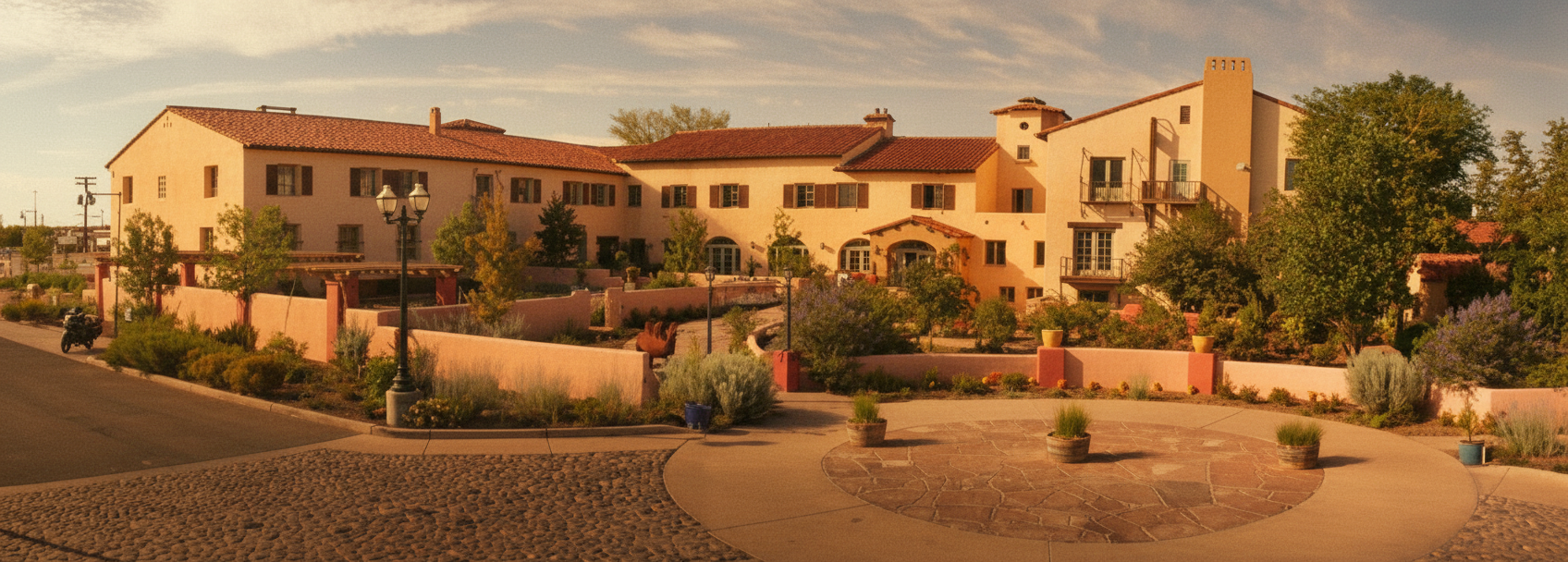
A meticulously restored 1930 Harvey House on Route 66, designed by Mary Colter and home to the acclaimed Turquoise Room.
La Posada Hotel stands as a monument to the golden age of western rail travel, positioned directly between the active Santa Fe Railway tracks and historic Route 66 in Winslow, Arizona. Opened on May 15, 1930, it was the final and grandest of the luxury hotels built by the Santa Fe Railway for the Fred Harvey Company. Renowned architect Mary Colter designed every element of the 65,000-square-foot Spanish Colonial Revival masterpiece, from the hand-carved furniture and wrought-iron fixtures to the sprawling six-acre gardens. Colter, who also designed iconic landmarks at the Grand Canyon, considered La Posada her absolute masterpiece. Built at a cost of over one million dollars during the onset of the Great Depression, the hotel was envisioned as a grand Spanish hacienda, complete with red clay tile roofs, deep-set windows, and hand-painted details. It served as a luxurious oasis for travelers crossing the high desert, welcoming legendary guests like Albert Einstein, Amelia Earhart, Franklin D. Roosevelt, and John Wayne before the decline of passenger rail forced its closure in 1957.
After decades of neglect and use as railroad offices, the property was saved from demolition in 1994 by preservationists Allan Affeldt and artist Tina Mion. They meticulously restored the building, reopening it in 1997 as a living museum and operating hotel. Today, the hotel features 54 individually decorated guest rooms, down from the original 70 to allow for larger bathrooms and modern comforts. Each room is named after a notable historical figure who once stayed at the hotel, such as the Tom Ford Room or the Charles Lindbergh Room, and is decorated with hand-painted Talavera tile sinks, custom wood furniture, and hand-woven rugs. The public spaces double as an art gallery, showcasing Mion's striking and thought-provoking contemporary paintings alongside historic Fred Harvey memorabilia. Outside, the restored gardens feature peaceful gravel pathways, a strawbale maze, and a viewing platform where guests can watch modern Amtrak and freight trains rumble past, just as travelers did a century ago.
Dining at La Posada centers around the legendary Turquoise Room, which opened in 2000 and has earned a reputation as one of the finest restaurants in the Southwest. Originally established by James Beard-nominated chef John Sharpe, who spent two decades defining its culinary identity before retiring in 2020, the kitchen is now led by Executive Chef Angel Soto and long-time Chef de Cuisine Jesus Nuñez. The menu pays deep homage to regional Native American and Mexican flavors, utilizing locally sourced ingredients from across the Colorado Plateau. Signature dishes include the famous "half-and-half" soup, a visually striking bowl of spicy black bean and sweet yellow corn soup swirled together with red chile cream, as well as Hopi piki bread served with hummus, and tender Navajo-Churro lamb sourced from local reservation ranchers. The dining room itself is a work of art, adorned with custom-designed dinnerware inspired by Mary Colter's original Mimbres patterns, completing an immersive journey into the history and heritage of the American West.
Order the signature soup at the Turquoise Room, which beautifully swirls sweet yellow corn and spicy black bean soup in a single bowl. Pair it with the Navajo-Churro lamb, then spend an hour wandering the hotel hallways to view Tina Mion's striking art collection.
Where to Stay — Curated accommodations hand-picked by Basecamp West. Glamping, boutique hotels, historic lodges, and unique stays across the American West.