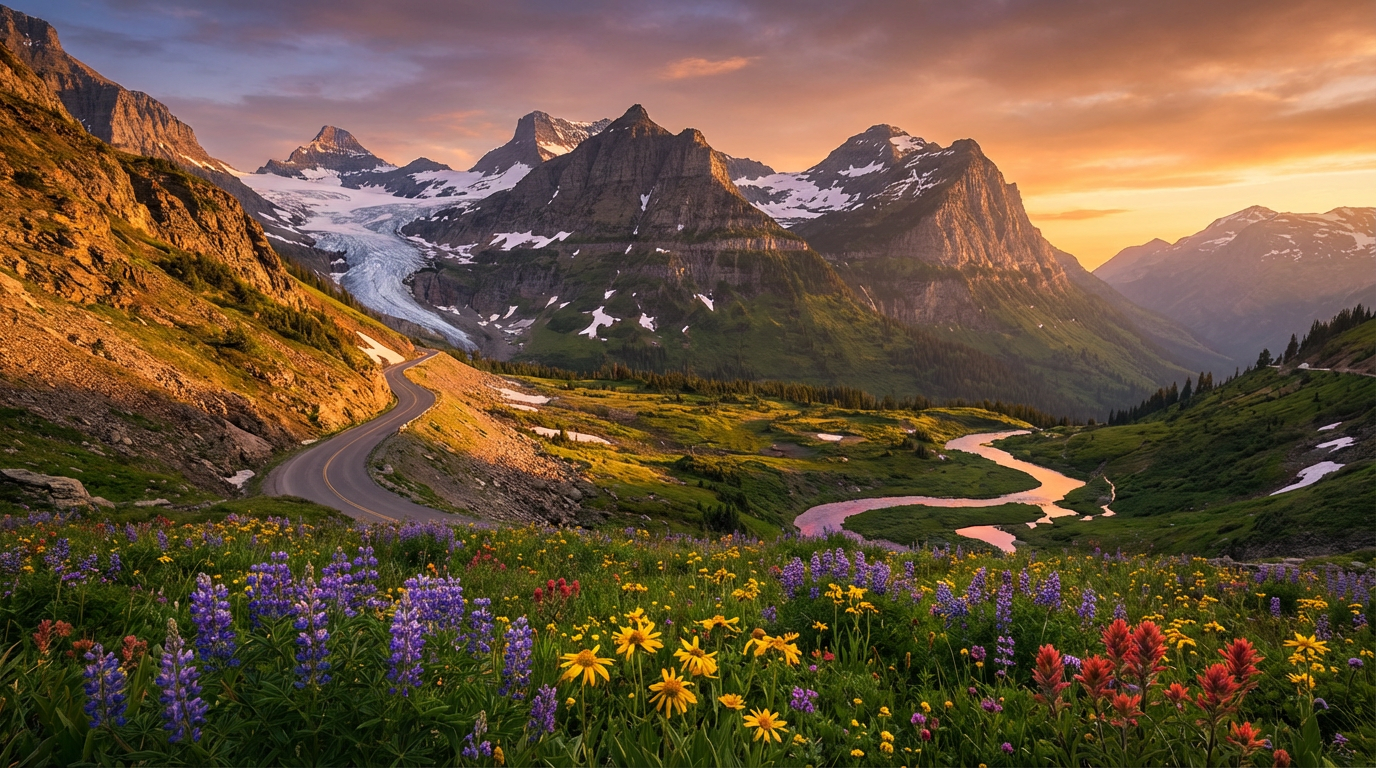
Glacier National Park preserves over one million acres of glacier-carved terrain straddling the Continental Divide in northwest Montana. Its landscape — sculpted by ice over millions of years — features knife-edge ridges (arêtes), horn peaks, hanging valleys, and over 700 lakes. The park's namesake glaciers, once numbering 150, have retreated to fewer than 25 active glaciers, making it a living laboratory for climate change. Going-to-the-Sun Road, one of the most dramatic mountain highways ever built, bisects the park and serves as its primary visitor corridor.
Typically late June to early July for the full road, depending on snowpack. The road closes for the season in mid-to-late October. Plowing begins in April but the highest sections near Logan Pass are the last to clear. Check the NPS website for real-time status.
2–4 days is ideal. Day 1: Drive Going-to-the-Sun Road with stops (plan 3+ hours). Day 2: Highline Trail or Hidden Lake from Logan Pass. Day 3: Many Glacier area — Grinnell Glacier or Iceberg Lake. Day 4: Two Medicine or Bowman Lake for a quieter experience.
Yes — a vehicle reservation is required to enter Going-to-the-Sun Road corridor between 6 AM and 3 PM during peak season (typically late May–early September). Reservations are released in batches. Alternatively, use the free park shuttle from Apgar or St. Mary to bypass the requirement.
Yes, but with caveats. Going-to-the-Sun Road is typically open until mid-October, weather permitting. Many facilities close after Labor Day. The western larch turn golden in late September–early October, creating spectacular scenery. Expect cold temperatures and possible snow.
Glacier Park International Airport (FCA) in Kalispell is 30 minutes from the west entrance (Apgar). Missoula (MSO) is about 3.5 hours. Great Falls (GTF) is 3 hours to the east side. Calgary (YYC) in Canada is about 4.5 hours to the north.