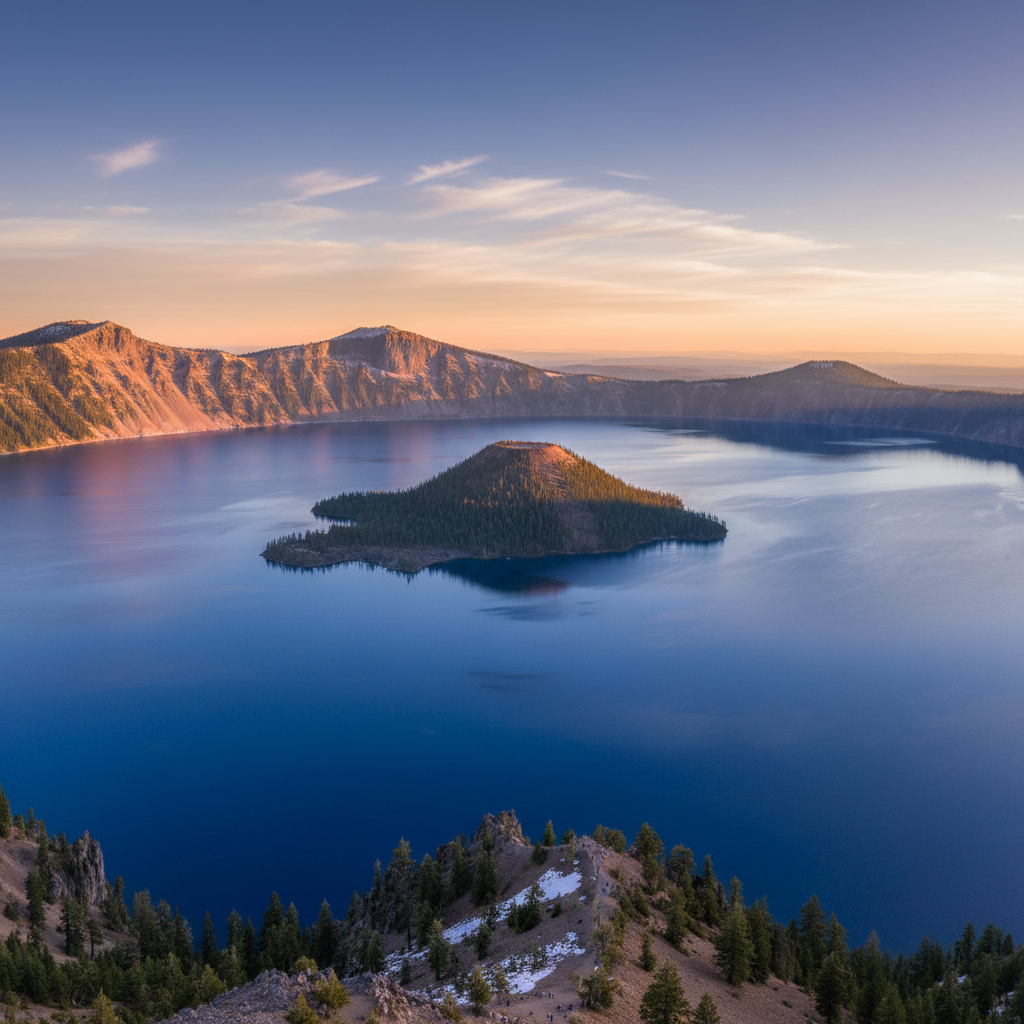
A volcanic caldera lake — the deepest in the U.S. at 1,943 ft — formed by the collapse of Mount Mazama ~7,700 years ago. Crater Lake sits at over 6,000 ft in the Cascade Range, receiving an average of 41 ft of snowfall annually.
July–September is the warm/dry window and also the visitation peak. NOAA normals show very low precipitation and near-zero snowfall in July–August. July 2024 saw 153,196 visits — the single highest month. This is the only reliable window for full Rim Drive access and hiking.
Crater Lake is the deepest lake in the U.S. (NPS FAQ: 1,943 ft) and a caldera-lake system of global geological significance. With only 505K visits in 2024 — far below Yosemite and Death Valley — it's one of the most underrated flagship national parks. The main tradeoff is heavy snow season that limits access for much of the year.
1 full day supports primary rim viewpoints and the Rim Drive loop. 2 days supports adding hikes to Mount Scott or Hillman Peak and provides contingency for weather, especially outside the July–September window.
October sits in the shoulder season — precipitation increases and early snowfall risk rises. The park advises hiking dates in July through October and snow experiences in December through May. October can be beautiful but increasingly storm-dependent.