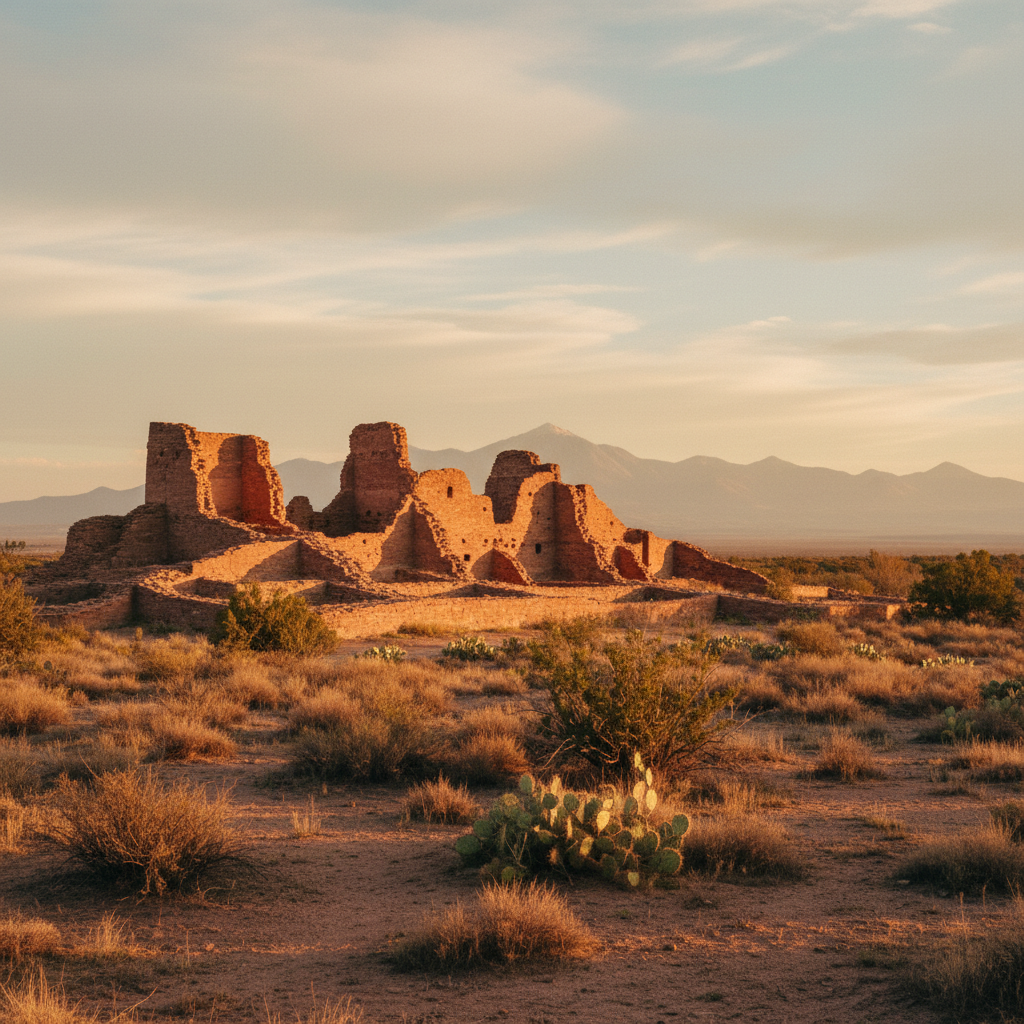
At Wupatki, you walk among the ghosts of a thousand years, the dry air still carrying the scent of dust and juniper. Here, between 1040 and 1250, a vibrant society of Ancient Pueblo people carved out a life from this stark, beautiful land. Over 800 years later, the remnants of their villages—multi-story pueblos, ball courts, and individual dwellings—stand as stark, quiet sentinels, painted in the same warm reds and browns as the surrounding desert floor. The sheer scale of the Wupatki Pueblo, with its estimated 100 rooms, offers a visceral sense of a thriving community.
Wandering the paths between the structures, you can almost hear the daily rhythm of life: the grinding of corn, the quiet conversation, the distant laughter. The intricate stonework, laid without mortar, speaks volumes about the skill and resourcefulness of its builders. Notice the subtle variations in architecture between the different villages; each site tells a slightly different story of adaptation and community. The open skies feel vast here, emphasizing the ingenuity required to sustain a civilization in such an environment.
The sheer exposure to the elements at Wupatki is part of its stark beauty. Sunlight rakes across the ancient walls, highlighting textures and shadows that shift with the hours. Take a moment to imagine the world these people inhabited, a world where the rhythms of the earth dictated everything. The silence here is profound, broken only by the wind or the call of a hawk, a perfect backdrop for contemplating the enduring human spirit and the passage of time.