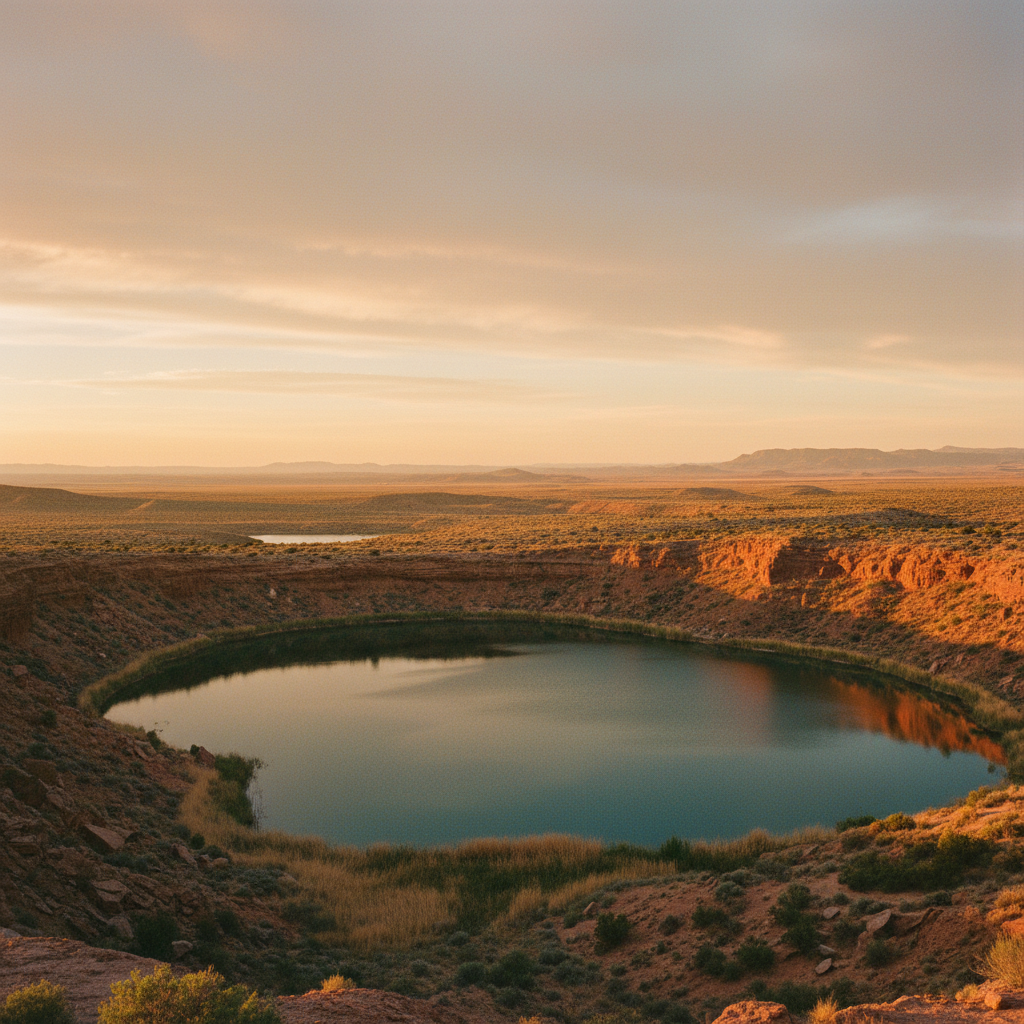
New Mexico's first state park features a chain of deep, spring-fed cenotes framed by red gypsum cliffs, offering a cool desert oasis for swimming, scuba diving, and historic CCC-era exploration.
Bottomless Lakes State Park, established in 1933 as New Mexico's first state park, is home to a chain of eight deep, water-filled sinkholes that punctuate the red gypsum bluffs of the Pecos River valley. These circular pools, known geologically as cenotes, were formed when underground water dissolved thick layers of Permian salt and gypsum, prompting the surface rock to collapse. The resulting sinkholes, which range in depth from 17 feet to 90 feet, owe their dramatic turquoise and emerald hues to aquatic plants, algae, and high mineral concentrations. The name of the park traces back to the late nineteenth century, when vaqueros driving cattle along the Goodnight-Loving Trail attempted to measure the depths. They tied multiple lariat ropes together and lowered them into the water, but because of strong underground spring currents pushing the ropes sideways, they never touched the bottom, giving rise to the legend that the lakes were bottomless.
While the park encompasses eight distinct sinkholes within its 1,400 acres, each has its own character and microenvironment. Lea Lake is the largest and most popular, spanning 15 surface acres with a maximum depth of 90 feet. It is the only lake in the park where swimming, scuba diving, and non-motorized boating are permitted, and visitors can rent paddleboards or pedal boats during the summer season. In contrast, the northernmost lake, Lazy Lagoon, is the largest by surface area at 26.1 acres but consists of three separate sinkholes surrounded by white gypsum salt crusts and alkaline mud. Devil's Inkwell is a small, steep-walled sinkhole named for its dark, ink-like water, which is shaded by the surrounding bluffs and colored by dense algae. Fishing is restricted to specific bodies of water: while it is strictly prohibited in Lea Lake, anglers can cast for stocked trout and catfish in Devil's Inkwell and Pasture Lake from March through November.
The physical character of the park was heavily shaped during the Great Depression by the Civilian Conservation Corps, whose members constructed the park's iconic stone structures between 1934 and 1940. Using local hand-shaped limestone, the CCC built the sweeping Lea Lake pavilion, rustic picnic shelters, and a historic stone water tower that stands as a testament to early conservation-era craftsmanship. Visitors can explore the park's unique terrain via several designated trails: the Bluff Trail climbs just under a mile along the red cliffs, offering panoramic views of the sinkhole chain, while the Skidmarks Trail provides over three miles of singletrack for mountain bikers. The surrounding gypsum-rich soil also yields 'Pecos diamonds,' which are small, doubly terminated quartz crystals that have grown inside the gypsum outcrops of the Seven Rivers Formation over millions of years. For overnight stays, the Lea Lake Campground offers 32 developed sites, including full hookups and water-and-electric sites, allowing travelers to camp right at the edge of this ancient geological wonder.
To find Pecos diamonds (small, doubly terminated quartz crystals that grow in the gypsum-rich soil) keep your eyes on the ground along the bluffs above the lakes, particularly near the overlook. Please remember that collecting specimens within the state park boundaries is prohibited, so leave your finds for others to discover.