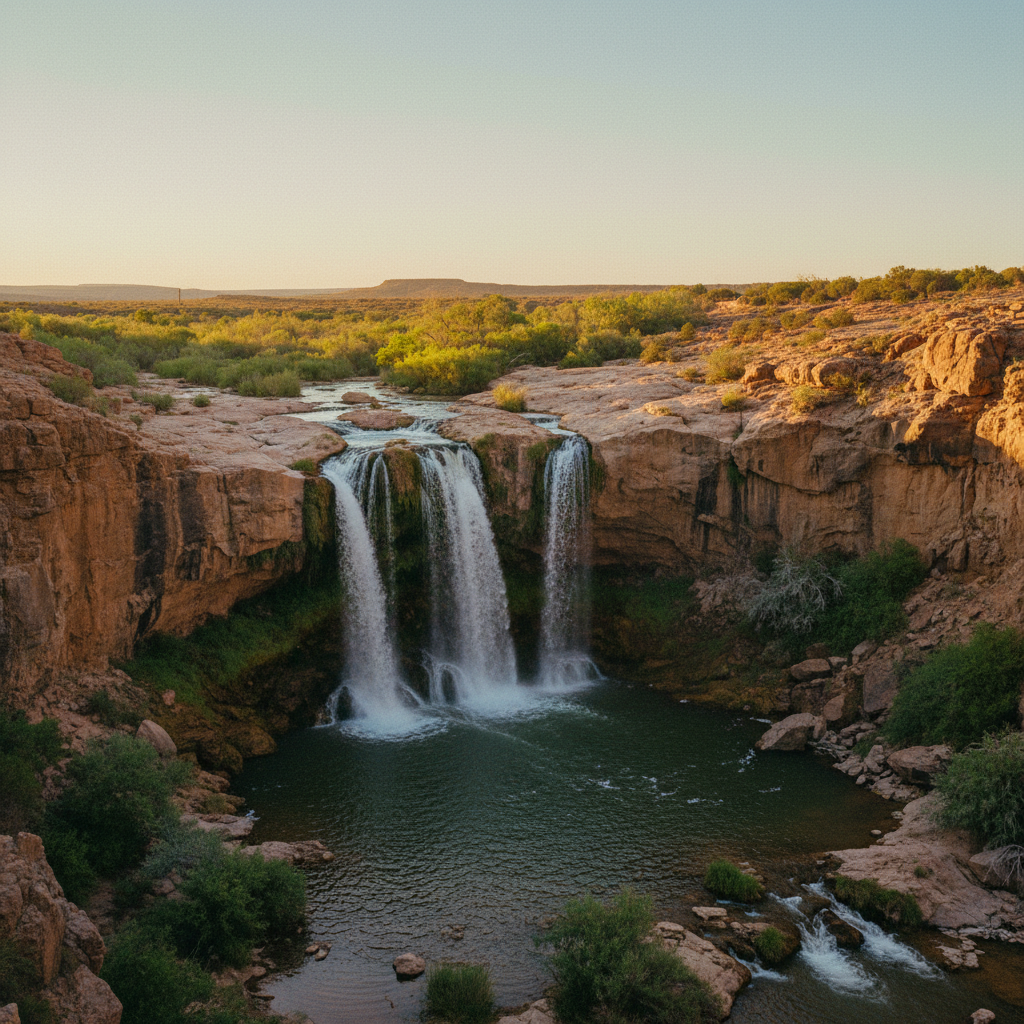
A spring-fed waterfall plunges 150 feet over a tufa-draped cliff in the Lincoln National Forest, feeding cool wading pools in the Chihuahuan Desert.
Sitting Bull Falls is a spring-fed oasis where water plunges 150 feet down a massive, tufa-draped canyon wall in the Guadalupe Ranger District of the Lincoln National Forest. The site has been a welcome source of water in the Chihuahuan Desert for millennia: archaeological evidence shows human habitation in the canyon dating back 10,000 years. The Apache name for the area is gostahanagunti, meaning "hidden gulch," and the presence of worked chert flakes, bedrock mortars, and nearby pictographs testify to centuries of Native American use. The origins of the modern name are less certain, though local lore suggests it may refer to a Sioux medicine man or a story about a cave behind the falls. Today, the water emerges from caves in the karstified Upper San Andres Formation, flowing through a series of streams and pools before cascading over the cliff. Much of the water then sinks back into the gravel floor of the canyon, eventually recharging the Pecos Valley underground aquifer.
The geology of the falls is a living record of the ancient Permian Capitan Reef complex, which formed approximately 250 million years ago at the edge of an inland sea. As the mineral-rich spring water spills over the cliff face, agitation and carbon dioxide degassing cause dissolved calcium carbonate to precipitate rapidly. This process coats the limestone cliff in fresh calcite, building up massive, porous tufa and travertine formations that hang like stone drapery over the canyon. Maidenhair ferns, mosses, and wild columbines cling to these wet, mineral-encrusted rocks, thriving in the humid microclimate created by the mist. Below the main drop, the water collects in clear, emerald-tinted pools that remain cool year-round, offering visitors a rare opportunity to wade and swim in a desert canyon environment.
In 1940, the Civilian Conservation Corps developed the day-use recreation area, constructing stone picnic shelters, pathways, and restrooms from local limestone. These historic stone cabanas still provide shaded picnic spots with tables and grills near the canyon floor. In front of one of the CCC stone buildings, a historic monument houses a time capsule dedicated on March 24, 1999, which is scheduled to be opened in 2040 to mark the centennial of the CCC construction. Access to the base of the falls is easy via a paved, ADA-accessible pathway that leads directly from the parking lot to the lower viewing deck. For those seeking a longer hike, Trail 68 (T-68) climbs steeply via switchbacks to the canyon floor above the falls. From there, hikers can follow the trail for about 1.1 miles to reach the actual Sitting Bull Spring, where the water bubbles out of the ground, or connect with Trail 214 to form a scenic 4.6-mile loop.
Bring water shoes if you plan to wade in the pools, as the limestone bottom can be slick and sharp. The historic CCC stone picnic sites are first-come, first-served, and the day-use area requires a five-dollar parking fee or an America the Beautiful pass.