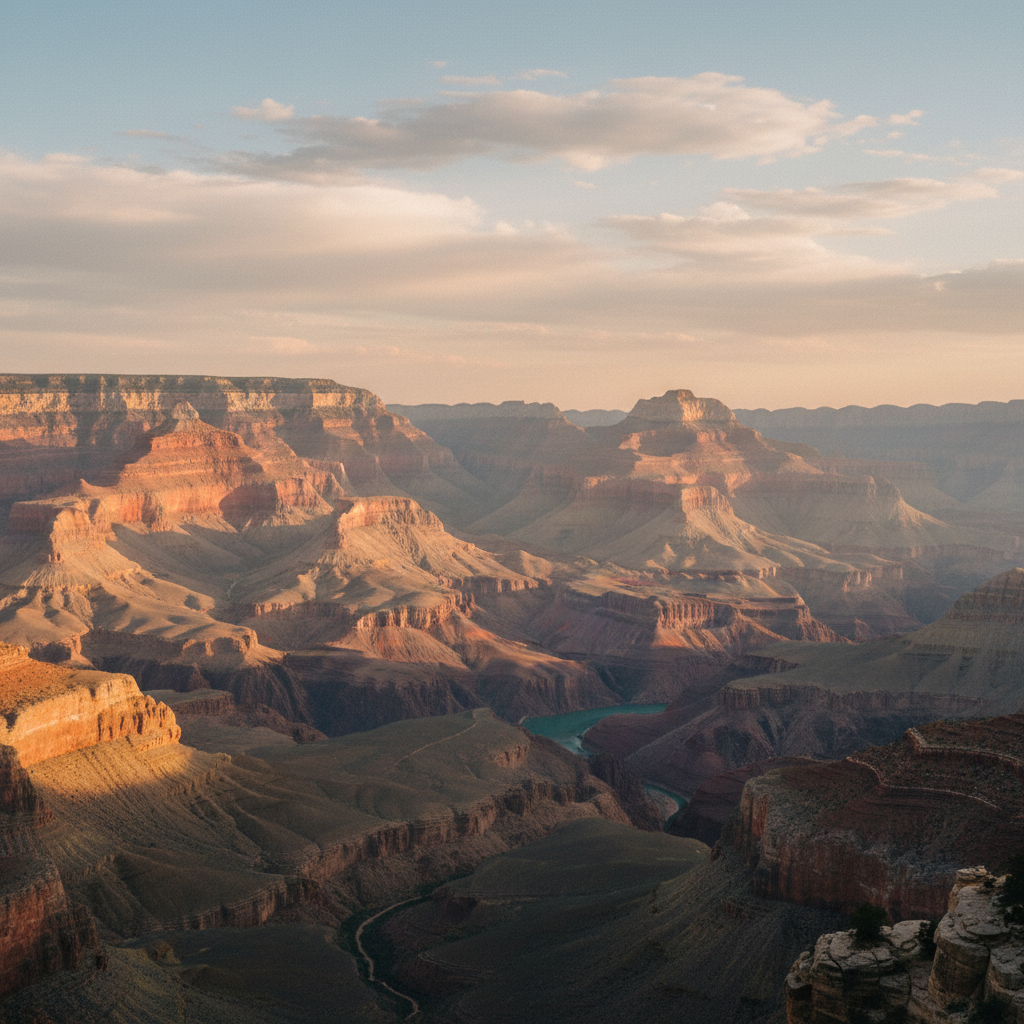
At Grandview Point, the South Rim pushes out into a dramatic peninsula, offering a rugged look at the canyon's mining history and the steep, cobblestoned path of the historic Grandview Trail.
At Grandview Point, the South Rim juts sharply northward, offering a fractured view that feels more immediate than the sweeping vistas of Mather or Yavapai. Here, the canyon walls drop away in a complex maze of high-walled mesas, deep side canyons, and sharp ridges. Standing at 7,400 feet, you are exposed to the full force of the canyon wind, which carries the scent of pinyon pine, Utah juniper, and sun-baked limestone. Below you, the red-orange peninsula of Horseshoe Mesa dominates the middle distance, a massive flat-topped feature that seems to float within the chasm. This point feels wilder and less manicured than its neighbors, a place where the sheer verticality of the canyon is laid bare without the buffer of paved pathways or guardrails at every turn.
This rugged projection was once the hub of the Grand Canyon's early tourism and industry. In the late 1890s, a prospector named Pete Berry discovered rich veins of copper ore on the mesa below. He constructed the Grandview Trail to haul the heavy ore out of the canyon by mule, paving portions of the steep route with hand-laid cobblestones. Berry also built the Grandview Hotel on the rim, hosting travelers who braved a long stagecoach ride from Flagstaff. While the Last Chance Mine eventually closed due to high transport costs, the legacy of this mining boom remains. The rocks themselves showcase the transition from the Kaibab Limestone on the rim down through the Coconino Sandstone, layers recording ancient deserts and shallow seas from hundreds of millions of years ago.
To step onto the Grandview Trail is to enter a different era of canyon exploration. Unlike the wide, graded switchbacks of the Bright Angel Trail, this is a rugged, historic route that demands constant attention. The trail drops precipitously, immediately confronting hikers with steep grades and exposed drops. As you descend, you can still see the remarkable stonework laid by Berry's crew, with logs bolted directly into the cliff faces to support the path. The air warms rapidly as you lose elevation, and the sounds of the rim fade into a profound desert silence. Reaching Horseshoe Mesa reveals the ruins of the mining camp, rewarding those who seek a quieter, more physical connection to the canyon, where human history is etched into ancient stone.
The Grandview Trail is steep, unmaintained, and far more strenuous than the corridor trails. If you descend to Horseshoe Mesa, carry plenty of water and a headlamp, and do not enter the abandoned mining shafts, which are unstable and contain toxic radon gas. The best light for photography is early morning when the shadows define the mesa.