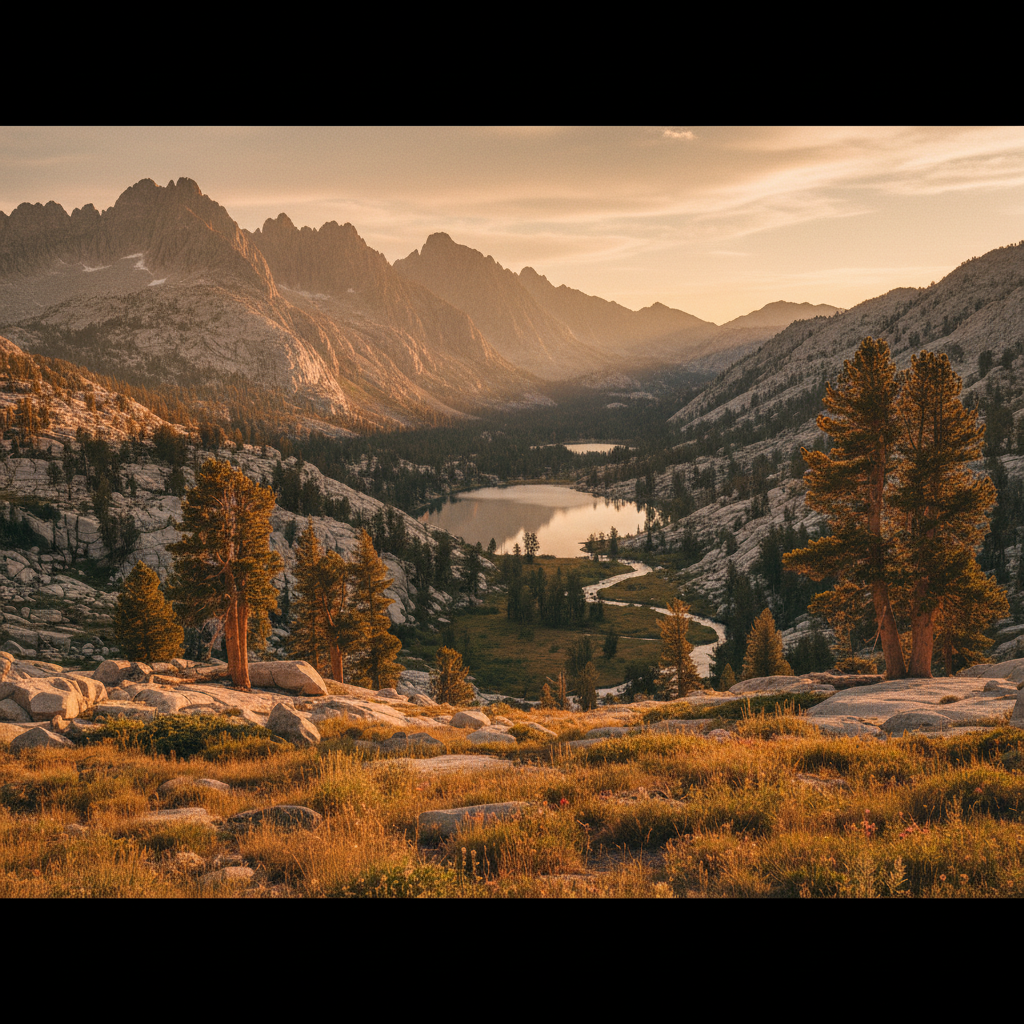
Protecting over 650,000 acres of the Sierra Nevada crest, this high-altitude wilderness is a realm of granite peaks, ancient pines, and historic trading routes.
The John Muir Wilderness protects 652,793 acres of the Sierra Nevada crest, stretching for 90 miles from the Mammoth Lakes region in the north to Cottonwood Pass in the south. Established by the Wilderness Act of 1964, this vast expanse is managed jointly by the Inyo National Forest on its eastern slopes and the Sierra National Forest to the west. Long before federal designation, these granite peaks and high-altitude basins were the ancestral lands of the Nüümü (Northern Paiute) and the Eastern Mono (Monache) peoples. The historic trans-Sierra trading routes, once called the Nüümü Poyo (the People's Trail), are now closely traced by the modern John Muir and Pacific Crest Trails that wind through the heart of the wilderness.
This is a landscape defined by extreme elevation and glacial artistry, containing 57 peaks that rise above 13,000 feet. Among these is the eastern flank of Mount Whitney, the highest summit in the contiguous United States at 14,505 feet, alongside other giants like Mount Humphreys, Mount Darwin, and Bear Creek Spire. The wilderness also harbors the Palisade Glacier, the southernmost glacier in the country, which sits beneath the rugged spires of the Palisade Group. Glacial action has carved deep, sheer canyons drained by McGee, Rock, and Bishop Creeks, leaving behind a series of high-altitude benches that cradle hundreds of alpine lakes. High passes like Mono Pass, Piute Pass, and Kearsarge Pass provide demanding gateways over the Sierra Crest, offering hikers access to remote basins where the air is thin and the silence is absolute.
In the brief summer window, the wilderness shifts from a frozen world of snow and ice to a vibrant ecosystem. Meadows of dwarf willow and alpine grasses erupt with Indian paintbrush, lupine, and shooting stars, while ancient foxtail and whitebark pines cling to the wind-scoured granite slopes. Yellow-bellied marmots whistle from talus fields, pikas gather grass among the boulders, and lucky visitors might catch a glimpse of the rare Sierra Nevada bighorn sheep. Autumn brings sharp, freezing nights that turn the scattered stands of aspen to brilliant gold before the winter snows seal the passes, rendering the high country inaccessible to all but the most experienced winter mountaineers. Because of its proximity to major population centers, the John Muir Wilderness is one of the most heavily visited wilderness areas in the United States, requiring strict wilderness permit quotas and bear-resistant food canister regulations to preserve its fragile alpine environment.
For a classic day-hike introduction, drive to the South Lake trailhead southwest of Bishop. The trail toward Bishop Pass climbs past a series of glacial benches, reaching the shores of Long Lake at two miles. Start early in the morning to catch the calmest winds and mirror-like reflections of Hurd Peak on the water, and continue to Saddlerock or Bishop Lake if you want a longer, high-altitude lunch spot.