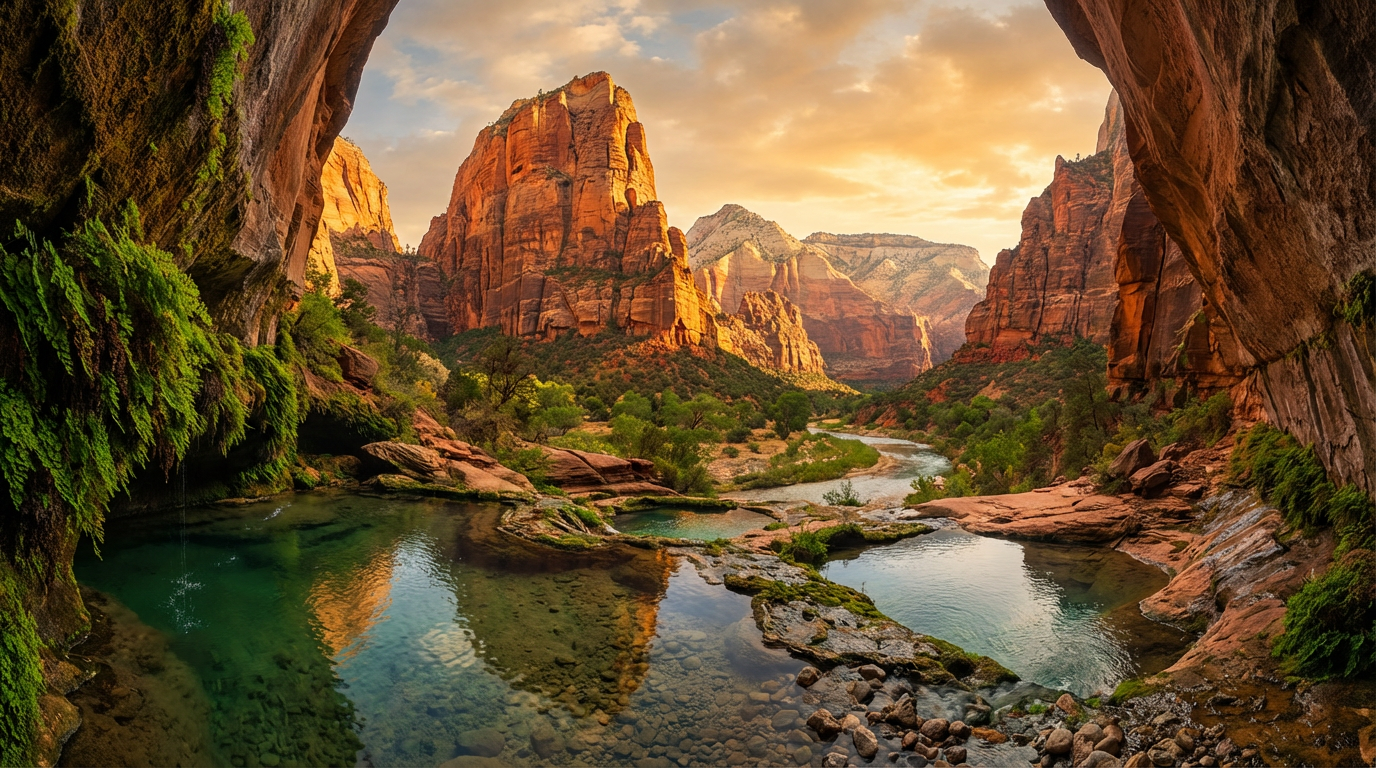
Zion National Park protects 229 square miles of stunning canyon country in southwestern Utah. The Virgin River has carved a deep, narrow gorge through colorful Navajo Sandstone cliffs that rise nearly 2,000 feet above the canyon floor. From the famous Narrows wade-hike to the chain-assisted climb up Angels Landing, Zion offers iconic adventures set against one of the most dramatic vertical landscapes in North America.
The best months to visit Zion are April, October, and March. Spring (March–May) brings wildflowers and comfortable hiking temperatures in the 60s–70s°F. Fall (September–October) offers warm days, cool nights, and stunning autumn color in the canyon. Summer (June–August) is the busiest season with temperatures frequently exceeding 100°F on the canyon floor.
Yes, permits are required for several popular hikes. Angels Landing requires a lottery-based permit (seasonal and day-before lotteries available at recreation.gov). The Narrows and other technical canyoneering routes also require permits. Many shorter trails like the Riverside Walk, Pa'rus Trail, and Watchman Trail are open without permits.
The Narrows is Zion's signature slot-canyon hike where you wade through the Virgin River between towering 1,000-foot sandstone walls. The most popular option is the bottom-up day hike from the Temple of Sinawava (up to 10 miles round trip). Water levels, flash flood risk, and seasonal closures determine accessibility — check conditions before heading out.
During shuttle season (typically mid-March through late November), private vehicles are not allowed on the Zion Canyon Scenic Drive. Free park shuttles run frequently from the Visitor Center to the Temple of Sinawava. Outside shuttle season, the road is open to private vehicles.
Yes, Zion receives snow primarily from December through March, mostly at higher elevations. The canyon floor may see light dustings but snow rarely accumulates for long. Higher trails like Angels Landing and the West Rim can be icy and dangerous in winter. The Zion–Mt. Carmel Highway (UT-9) occasionally closes temporarily due to snow and ice.